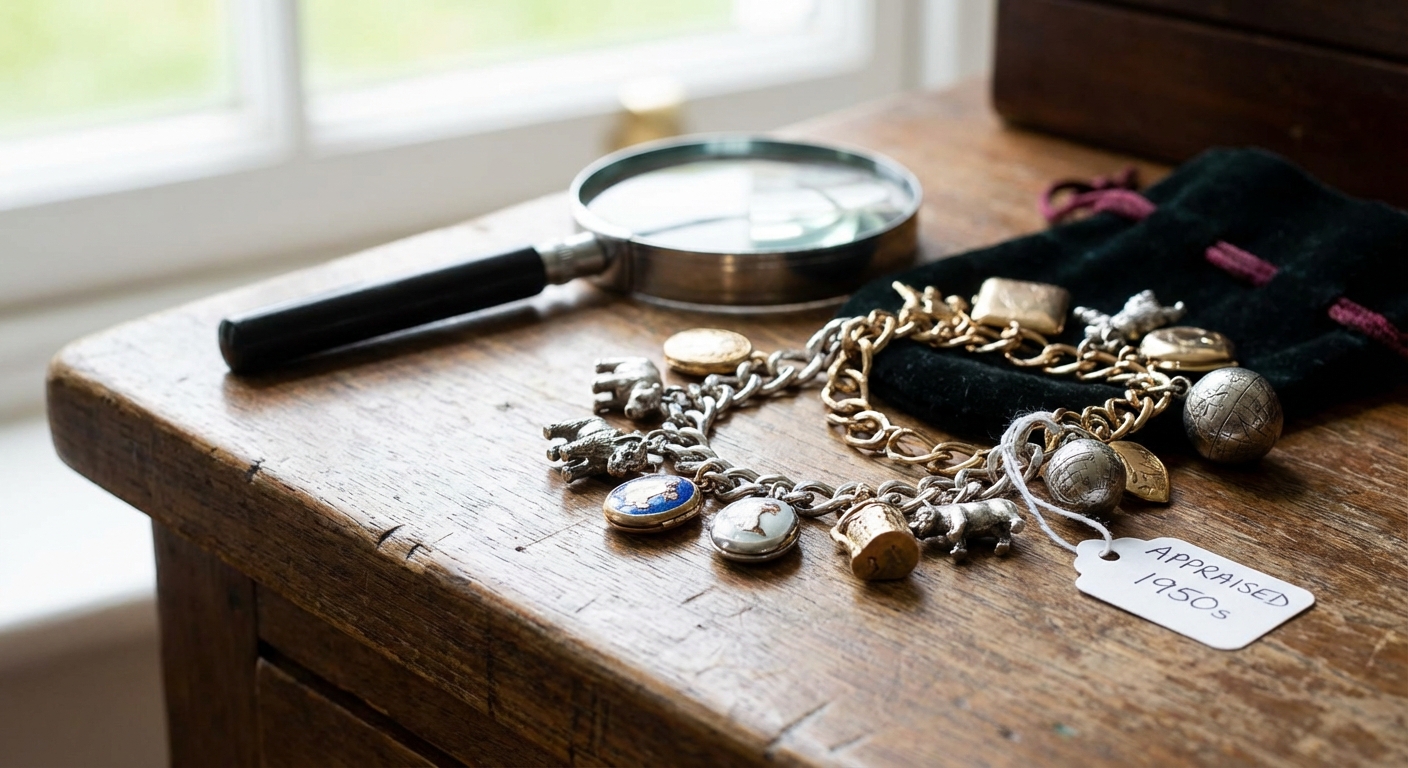
The jingle of a charm bracelet is more than just a pleasant sound; it’s a symphony of memories, a tangible timeline of a life lived. I remember a recent appraisal where a delicate gold bracelet, seemingly unassuming at first glance, revealed a story etched in its miniature adornments. Each tiny charm, from a whimsical hot air balloon to a meticulously detailed miniature book, spoke of travels, passions, and milestones. The patina of age, the subtle wear on a beloved sailboat charm, the faint inscription on a locket – these aren't just signs of use; they are indicators of value, both sentimental and monetary. Appraising these "tiny treasures" requires a keen eye for detail and an understanding that their worth extends far beyond the weight of their metal.
When approaching a vintage charm bracelet for appraisal, one crucial strategy is to meticulously document each individual charm. Don't just note the material; look for maker's marks, hallmarks, and any unique craftsmanship. A charm stamped with a recognizable maker's mark, like a Trifari or a Napier, instantly elevates its potential value, indicating a known quality and design history. Similarly, hand-engraved details or intricate filigree work on a miniature teapot or a tiny pair of opera glasses suggest a higher level of artisanal skill, which commands a premium. Think of it like identifying individual players in a band; each one contributes to the overall harmony, and their individual quality matters.
Another key strategy involves understanding the context of the bracelet's creation and its components. Was it assembled over time, or are the charms all from a specific era or designer? A bracelet featuring charms from the Art Deco period, for instance, with their geometric designs and often vibrant enamel work, will have a different market appeal and value than one composed of mid-century novelty charms. This is where the concept of "path dependency" becomes relevant; the historical sequence and choices made in assembling the bracelet significantly influence its current value and desirability. We're not just looking at the sum of its parts, but how those parts came together and what that journey signifies.
Furthermore, condition plays a vital role. While some wear is expected and even desirable for its historical narrative, significant damage like broken links, missing enamel, or severely worn details can detract considerably from value. It's about balancing that narrative with the physical integrity of the piece.
In practice, I once appraised a sterling silver bracelet with a collection of whimsical charms from the 1950s. While the silver itself had a solid melt value, a few of the charms, like a tiny poodle with its original painted collar intact and a miniature movie camera with a tiny lens, were particularly sought after by collectors of that specific era. Their individual desirability, coupled with their excellent condition, significantly boosted the bracelet's overall appraisal value beyond just the silver content.
Ultimately, the charm bracelet is a story waiting to be told, and its appraisal is the act of translating that narrative into a professional valuation. If you have a vintage charm bracelet that you believe holds more than just sentimental value, my advice is straightforward: seek a professional appraisal. An experienced appraiser can meticulously examine each component, research its provenance, and provide you with an accurate, objective assessment of its worth, ensuring these tiny treasures are properly recognized and valued.