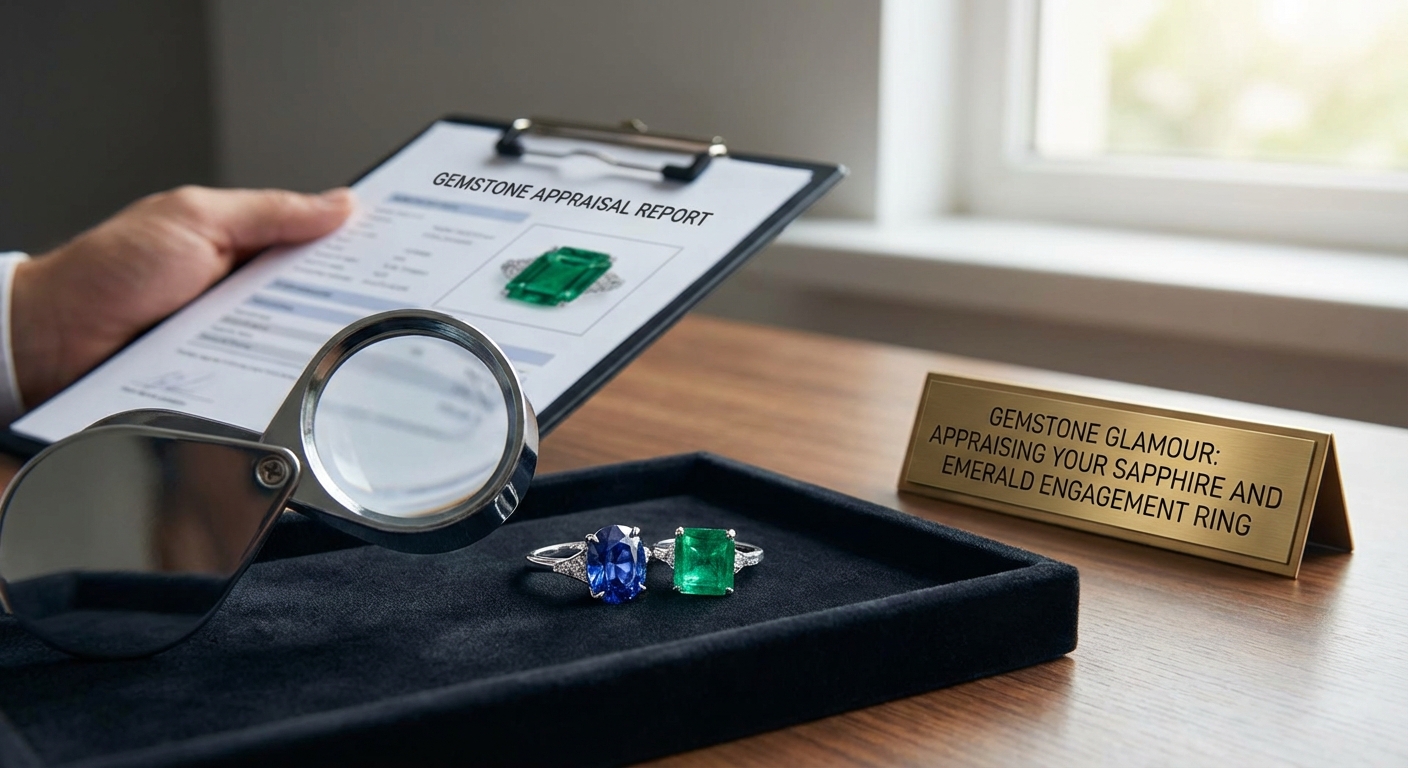
The glint of a sapphire engagement ring, deep as a twilight sky, or the vibrant green of an emerald, whispering tales of ancient lands – these are stones that capture hearts and imaginations. When you decide to have these cherished pieces appraised, whether for insurance, estate planning, or simply to understand their true worth, it’s a journey into appreciating their unique beauty and inherent value. Imagine a client coming in, their eyes alight with the story of their grandmother’s emerald ring, passed down through generations, its verdant hue undimmed by time. Or perhaps a sapphire, a recent symbol of commitment, its brilliant blue a testament to enduring love. My role, as an appraiser, is to translate that emotional connection into a tangible, objective assessment of value.
When appraising a sapphire or emerald engagement ring, a few key areas demand our attention. Firstly, color is paramount. For both sapphires and emeralds, the most desirable colors are those that are rich, saturated, and evenly distributed. For sapphires, this often means a pure, vibrant blue, free from excessive grey or green undertones. For emeralds, it’s that intense, velvety green, not too dark or yellowish. Think about the difference between a pale, watery blue sapphire and one that glows with an almost electric intensity – that difference significantly impacts value. We're essentially evaluating the light absorption and reflection within the stone, a concept rooted in spectrophotometry, though we perform this visually, of course.
Secondly, we must meticulously examine the clarity and cut. While some inclusions are expected and even characteristic of certain gemstones (like the “jardin” in an emerald), excessive flaws can detract from both beauty and durability. A well-cut stone will maximize brilliance and sparkle. For a sapphire, this means looking for how well light returns from the facets. For an emerald, a well-proportioned cut can help mask natural inclusions and enhance its color. A perfectly round brilliant cut might be stunning on a diamond, but for an emerald, a well-executed step cut, like an emerald cut itself, is often preferred to highlight its unique color.
Finally, understanding the origin and any treatments is crucial. While I am not a GIA-certified gemologist, my training allows me to identify common treatments. For instance, many sapphires are heated to improve their color and clarity, and this is a standard and accepted practice that is reflected in their value. Emeralds, on the other hand, are almost always treated with oil or resin to fill surface-reaching fissures, which enhances their stability and appearance. Knowing if a stone has been treated, and to what extent, is a critical piece of information for an accurate appraisal.
In practice, I recently examined a stunning sapphire ring. The stone was a beautiful cornflower blue, with excellent saturation. However, upon close inspection, a significant number of small, white needle-like inclusions were visible to the naked eye, impacting its clarity and light return. While the color was highly desirable, these inclusions meant its value was moderated compared to a flawless stone of similar size and color. This illustrates how all factors must be considered in conjunction.
So, when you’re ready to understand the value of your sapphire or emerald engagement ring, remember that it’s a multifaceted assessment. Don't hesitate to seek out a qualified personal property appraiser. We’ll guide you through the process, ensuring you have a clear, professional, and accurate valuation that respects both the intrinsic qualities of your gemstones and their emotional significance.