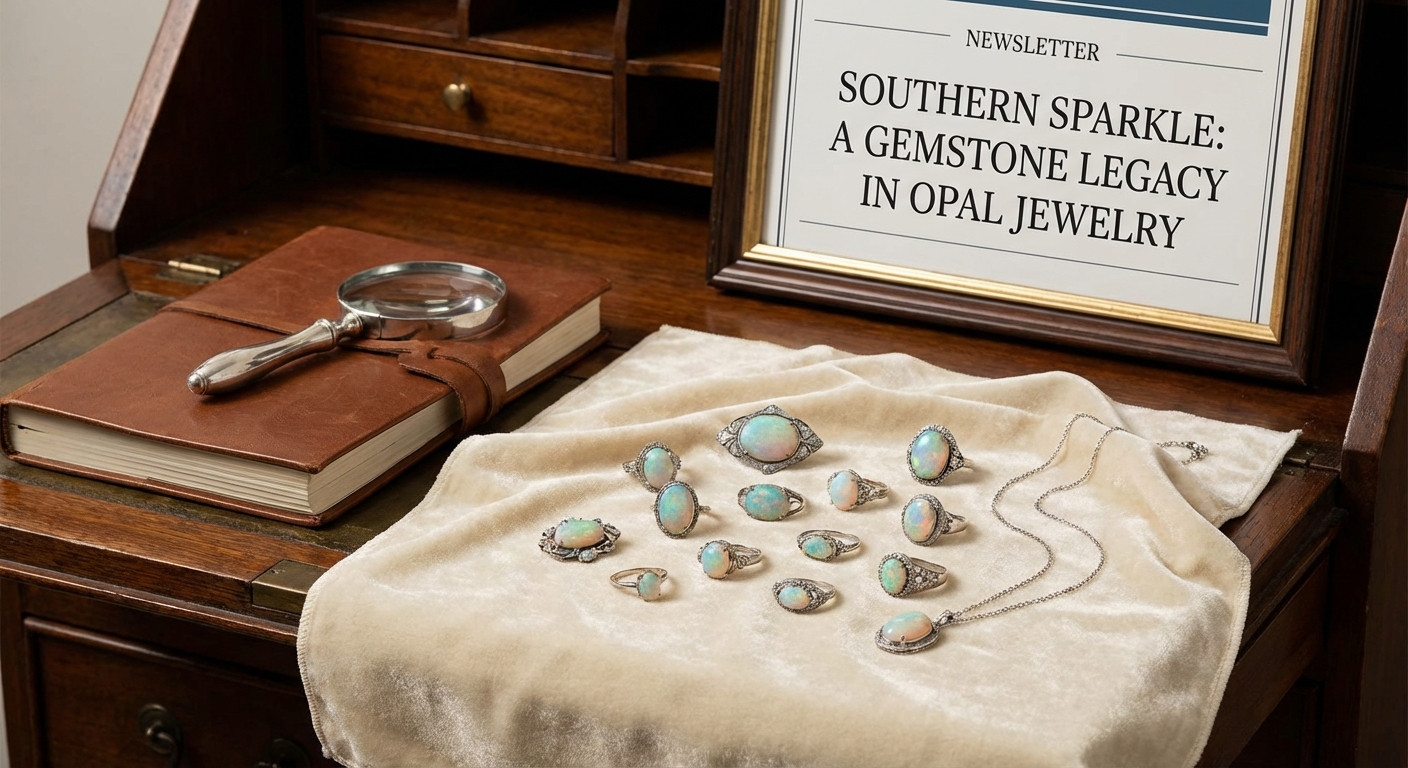
Imagine a crisp autumn afternoon, the air carrying the scent of fallen leaves and woodsmoke. You're helping a family sort through an attic, a treasure trove of forgotten memories. Tucked away in a velvet-lined box, alongside faded photographs and delicate lace, you discover a necklace. The stones aren't diamonds or rubies, but something far more ethereal – opals, their surfaces shimmering with an inner fire, reflecting blues, greens, and flashes of rose. This isn't just an old piece of jewelry; it's a tangible link to a past, perhaps a grandmother who cherished its unique beauty, a piece that embodies a distinct Southern charm and a legacy of appreciating the extraordinary.
Opals, often born from ancient waters in arid landscapes, possess a captivating allure that has resonated through generations, particularly in the American South. Their iridescent play-of-color, known as opalescence, is a natural phenomenon that makes each stone utterly unique. Understanding this inherent variability is key when assessing their value. For instance, the intensity and breadth of color are paramount. A vibrant, full-spectrum play across the entire stone, visible from multiple angles, will command a higher appraisal than a stone with limited color or one that only flashes color when viewed directly. Furthermore, the body tone of the opal – its base color – plays a significant role. While white opals are common, darker, more saturated body tones, like those found in black opals, are rarer and thus generally more valuable. This is a practical application of the principle of rarity, a fundamental concept in appraisal, where scarcity directly influences desirability and, consequently, market value.
When considering opal jewelry for appraisal, I always look for a few key indicators. First, examine the clarity of the opal. While some inclusions are natural and even desirable in opals, excessive fractures or "crazing" can detract from both beauty and durability. A well-formed opal will have a smooth, unbroken surface, even if it displays internal patterns. Second, assess the cut and setting. Is the opal well-proportioned and polished to best display its color? Is the setting secure and complementary to the stone? A skilled jeweler will have chosen a setting that protects the opal's edges while maximizing its visual impact. For example, a cabochon cut, a smooth, rounded dome, is most common for opals, as it best captures and refracts light, enhancing the play-of-color.
I recall appraising a brooch from the mid-20th century, featuring several substantial opals. The family believed it was merely costume jewelry. However, upon closer inspection, I noted the remarkable depth and brilliance of the color flashes within each stone. The body tone was a deep, smoky grey, a less common base that made the vibrant blues and greens pop. The setting, a delicate filigree in white gold, was also of good quality. It turned out to be a significant piece, far exceeding their initial expectations.
Ultimately, determining the true value of opal jewelry involves a nuanced understanding of its inherent qualities and market trends. If you have a piece of opal jewelry that holds sentimental value or you're simply curious about its worth, don't hesitate to seek a professional appraisal. Bringing your jewelry to an experienced appraiser ensures you receive an accurate valuation based on a thorough examination of the stones, the setting, and current market conditions.