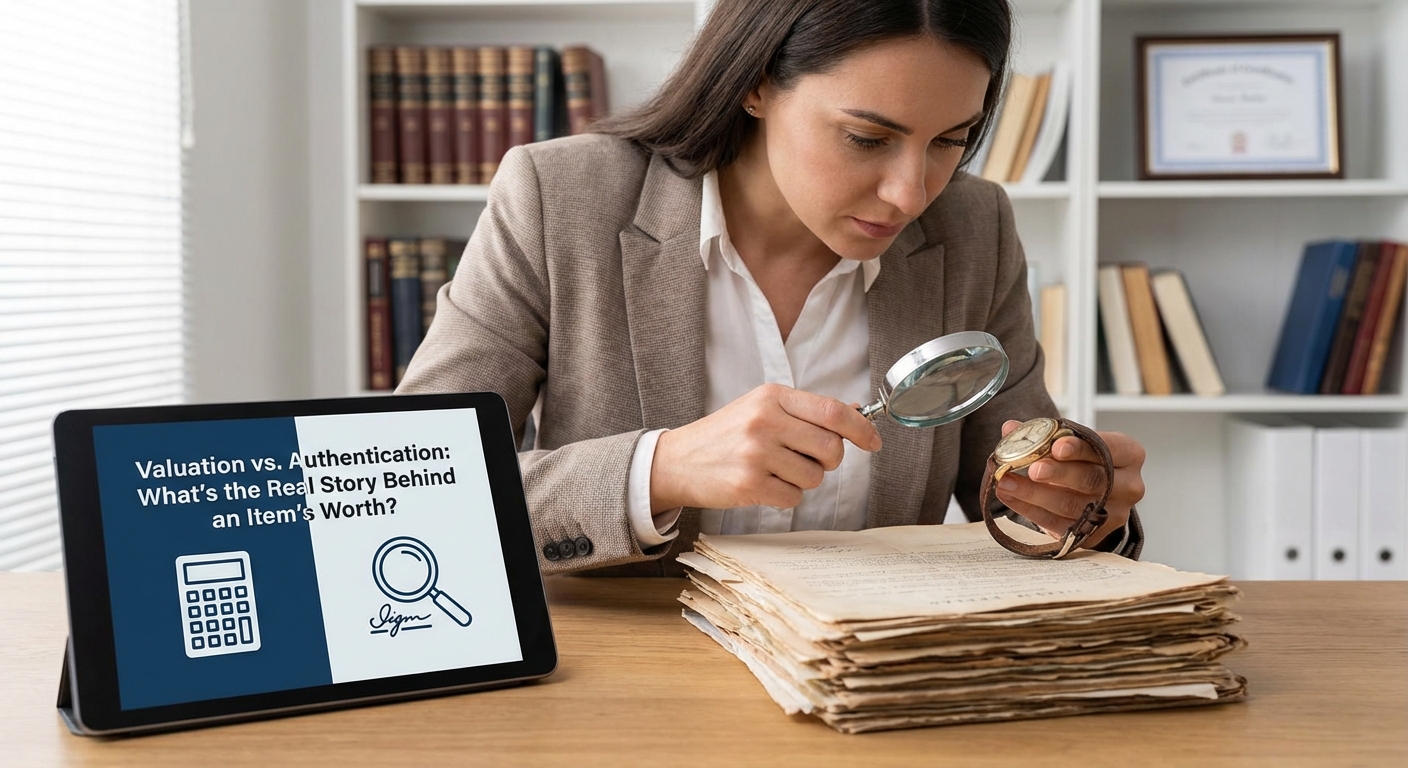
Imagine a dazzling Edwardian diamond brooch, passed down through generations. It’s undeniably beautiful, a family heirloom brimming with sentiment. Yet, when its owner decides to sell, the appraisal comes back significantly lower than expected. Why? Because while sentiment is priceless, monetary value is a different beast, governed by factors far beyond family lore. This is where the crucial distinction between valuation and authentication truly comes into play, a concept I navigate daily as a personal property appraiser.
Many people assume that if an item is old and looks valuable, it is valuable. However, what we often confuse is authentication – the process of verifying an item's identity, origin, and authenticity – with valuation, which is the determination of its monetary worth. Authentication is the bedrock upon which valuation is built. Without it, any subsequent monetary assessment is speculative at best. Think of it like buying a house; you wouldn't just trust the listing photos. You'd get an inspection to confirm the structure, plumbing, and electrical systems are sound before agreeing to a price. Similarly, for an antique or collectible, authentication confirms it's the real deal, not a clever reproduction or a misattributed piece.
So, how do we begin to unravel the real story behind an item's worth?
Firstly, rigorous provenance research is paramount. This involves tracing an item’s history of ownership. A documented lineage, especially if it includes notable collectors or historical figures, can significantly bolster authenticity and, consequently, value. For instance, a signed painting by a recognized artist will command a higher price if its provenance includes exhibition records or is documented in the artist’s catalogue raisonné, rather than being a "found" piece with no traceable past.
Secondly, expert examination is non-negotiable. This goes beyond a cursory glance. For jewelry, while I’m not a GIA-certified gemologist, I have extensive training in identifying gemstones and diamonds, assessing their cut, color, clarity, and carat weight – the 4 Cs. I also look for maker’s marks, hallmarks, and the stylistic characteristics indicative of a particular era or designer. A skilled appraiser will identify subtle clues that distinguish a genuine Art Nouveau enamel pendant from a later imitation, or a meticulously crafted Victorian mourning ring from a mass-produced piece.
Thirdly, understanding market comparables is key. Once authenticity is established, valuation hinges on what similar items have recently sold for in the open market. This isn’t about wishful thinking; it’s about data. We analyze auction records, dealer inventories, and private sales of comparable items, considering factors like condition, rarity, desirability, and current economic trends. This is where the concept of hedonic regression comes into play, a statistical method used to estimate the value of an item by breaking down its attributes and assessing the marginal contribution of each to the overall price.
In practice, I once appraised a collection of vintage watches. Initially, the owner believed they were all incredibly valuable based on their age. Through authentication, we discovered that while one pocket watch was a rare Patek Philippe in excellent condition, the others were more common brands, some with later replaced movements. The valuation reflected this; the Patek Philippe’s value was significantly amplified by its authenticity and rarity, while the others were valued based on their functional condition and general market appeal for vintage timepieces.
Ultimately, the "real story" behind an item's worth is a tapestry woven from verifiable facts. It's the intersection of authenticated identity and demonstrable market demand.
If you're considering an appraisal, remember this: provide your appraiser with as much historical information as you have, be open to their expert examination, and understand that the final valuation is a professional assessment based on evidence, not just emotion.