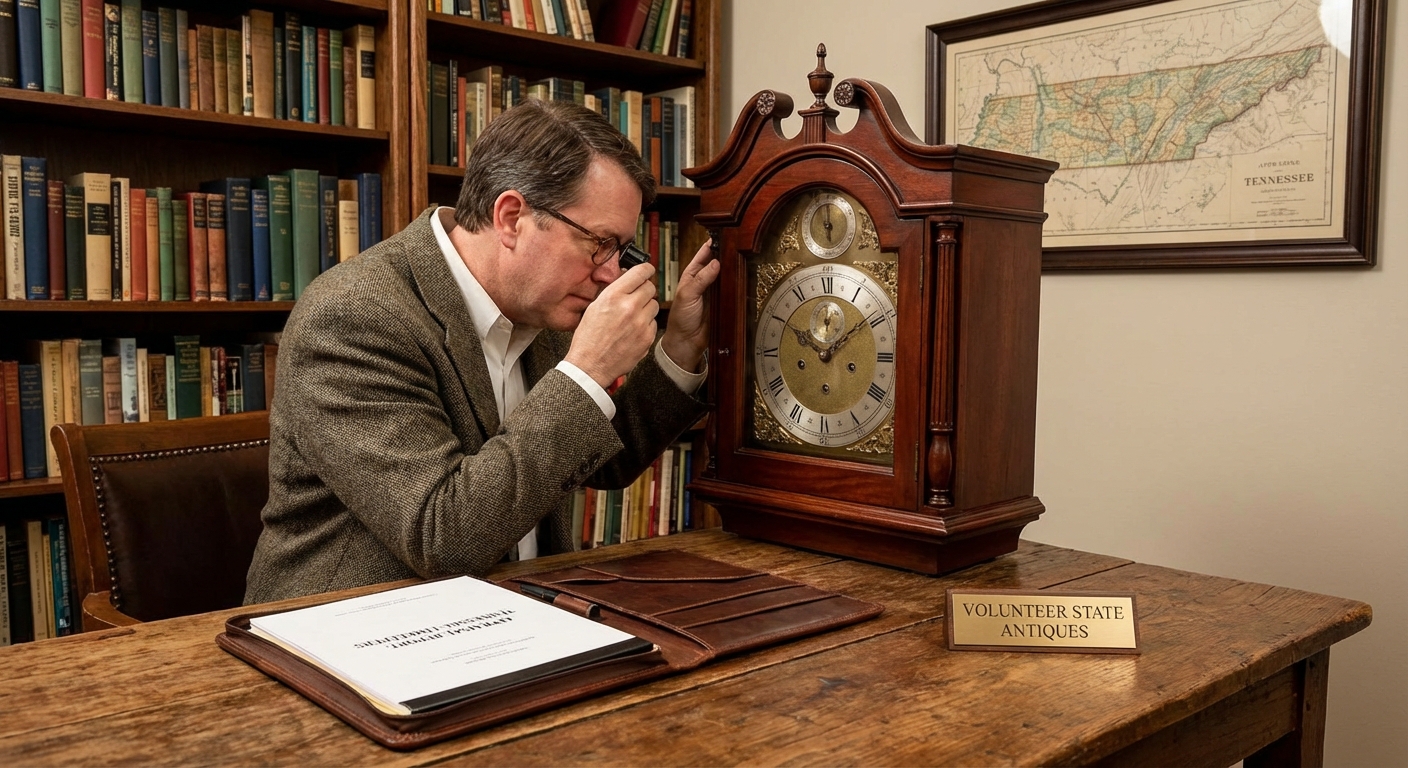
The gentle tick-tock of an antique clock can evoke a sense of nostalgia, transporting us back to simpler times. Imagine discovering a forgotten treasure in an attic, its ornate case hinting at stories untold, its pendulum still swinging with a faint, rhythmic pulse. Such was the case with a grandfather clock I recently examined. Its mahogany case, though dusty, revealed exquisite inlay work, and its brass pendulum, tarnished but intact, bore the maker's mark of a long-vanished Tennessee craftsman. This isn't just about a timepiece; it's about preserving a piece of history, a tangible link to the artisans and eras that shaped the Volunteer State. Appraising these "Tennessee Timekeepers" requires a blend of horological knowledge and an understanding of local provenance.
When approaching an antique clock from Tennessee, the first critical step is establishing its provenance, essentially its history of ownership and origin. This is more than just identifying the maker; it's about understanding its journey. I always begin by carefully examining any maker’s marks, serial numbers, or labels. Often, these are found on the movement, the back of the dial, or inside the case. If a Tennessee maker is identified, the next phase involves researching their history, their typical production period, and the quality of their work. Local historical societies, antique clock enthusiast forums, and specialized horological reference books are invaluable resources here. Understanding the context of its creation within Tennessee’s industrial or artisanal landscape significantly impacts its value.
Another key strategy is to meticulously assess the condition of both the case and the movement. For the case, I look for original finishes, any signs of damage like veneer lifting, cracks, or woodworm, and the integrity of the joinery. Originality is paramount; a well-preserved original case is almost always more valuable than one that has been heavily restored, especially if the restoration materials or techniques are not sympathetic to the period. For the movement, I evaluate its completeness and originality. Are all the wheels and gears present? Is the escapement functioning? While I'm not a clock repair specialist, I can identify obvious issues that would necessitate professional restoration, which, of course, factors into the appraisal. We often see a significant difference in value between a clock that runs (even if imperfectly) and one that is completely disassembled or missing crucial parts.
A concept that consistently guides my appraisals is the principle of "Functional Obsolescence". This refers to a loss in value due to outdated design, inadequate functionality, or the availability of superior alternatives. While antique clocks are valued for their historical and aesthetic qualities, a movement that is incredibly difficult or expensive to repair, or a design that is no longer practical for modern living, can subtly influence its market desirability, and thus its appraisal value, even if the craftsmanship is superb. It’s a delicate balance between appreciating its historical significance and acknowledging its practical limitations in today's market.
I recall a beautiful early 19th-century tall case clock from East Tennessee. It had a distinctive dial painted with local flora, a detail that immediately piqued my interest. While the movement required significant attention from a specialist, the incredibly rare and well-preserved painted dial, along with documented ownership within a prominent local family, elevated its appraisal considerably. The story, tied to its Tennessee origins, was as valuable as the mechanics.
Ultimately, when you have a Tennessee timekeeper that you’re considering for appraisal, remember that its value is a multifaceted equation. It’s not just about the ticking; it’s about the craftsmanship, the history it embodies, and its connection to the Volunteer State. If you have a clock that you believe holds historical or monetary significance, seeking a professional appraisal is the best way to understand its true worth. Look for an appraiser with specific expertise in antique clocks and a solid understanding of regional history, ensuring your cherished heirloom is properly valued.