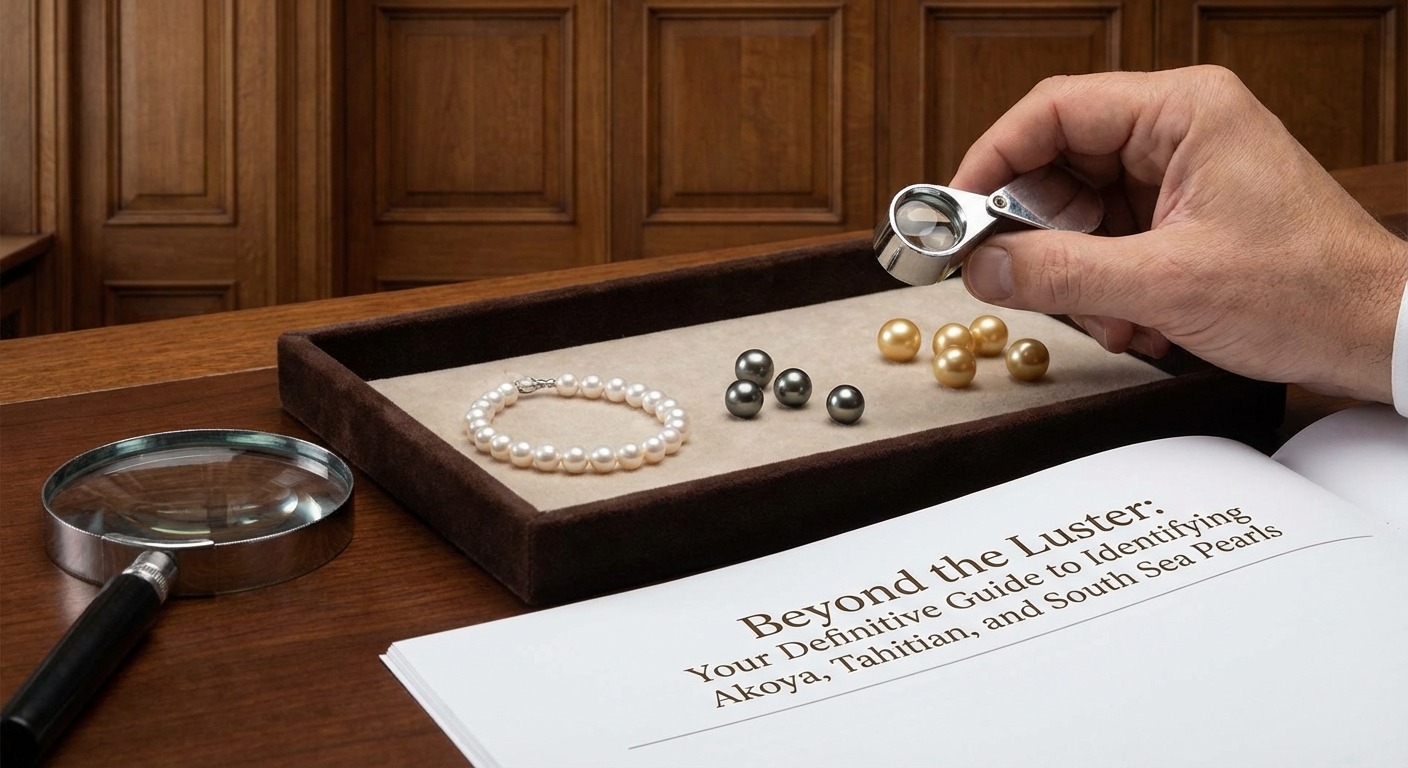
Imagine holding a strand of pearls, the creamy luminescence catching the light, and wondering about their story. Is it a classic, elegant Akoya from Japan, or something more exotic and rare? Understanding the distinct characteristics of different pearl types is key, not just for collectors, but for anyone who owns or is considering acquiring these treasures. Recently, I examined a beautiful necklace that a client inherited. They were unsure if they were fine Akoyas or perhaps a less valuable imitation, and knowing the difference significantly impacted their perceived value. This is a common scenario, and thankfully, there are reliable ways to distinguish between the most coveted pearl varieties.
When examining pearls, the first crucial step is to consider their luster, but not just in isolation. Luster is the brilliance and shine emanating from the pearl's surface, and while all good pearls have it, the quality differs. Akoya pearls, known for their crisp, sharp luster, often exhibit a near-mirror-like reflection. Think of a perfectly polished apple reflecting the light. Tahitian pearls, on the other hand, tend to have a softer, more diffused luster. Their glow is often described as velvety or smoky. South Sea pearls, the largest of the three, often display a satiny, mellow luster, with a gentle glow that seems to emanate from within. This isn't about good or bad luster; it's about the type of luster.
Beyond luster, the overtone is a vital clue. Overtone refers to the secondary colors that appear on the pearl's surface, visible as you rotate it. Akoyas typically display rose, cream, or silvery overtone, adding a subtle warmth to their primary white or cream body color. Tahitian pearls are celebrated for their exotic overtones, which can range from green and peacock to blue, aubergine, and even silver. The famed "peacock" overtone, a mix of green, pink, and blue, is particularly desirable. South Sea pearls can exhibit a range of overtones, often including silver, gold, cream, or white, which complement their substantial body color. Observing these subtle color shifts under good lighting is essential; it's like seeing the subtle undertones in a watercolor painting.
Size and shape also play a significant role. Akoya pearls are typically smaller, ranging from 2mm to 10mm, and are most prized in perfectly round shapes. While other shapes exist, roundness is the hallmark of quality. Tahitian pearls are known for their larger sizes, commonly 8mm to 15mm, and are frequently found in baroque or drop shapes, though round Tahitian pearls are highly sought after. South Sea pearls are the giants of the pearl world, often measuring 10mm to 20mm, and are also found in a variety of shapes, with round and drop shapes being particularly valuable. This variation in size and shape aligns with the principles of rarity and desirability in gemological grading.
In practice, I often advise clients to hold their pearls under a bright, natural light source and rotate them slowly. Notice the intensity of the shine, the depth of the color, and any secondary hues that appear. For instance, a perfectly round, intensely lustrous pearl with a distinct rose overtone is a strong indicator of a fine Akoya. Conversely, a larger, darker pearl with a smoky luster and a prominent green or peacock overtone is likely a Tahitian.
When you're ready to understand the true value and origin of your pearls, a professional appraisal is your best resource. I can meticulously examine these characteristics, along with other factors like surface texture and nacre quality, to provide you with a definitive identification and valuation.