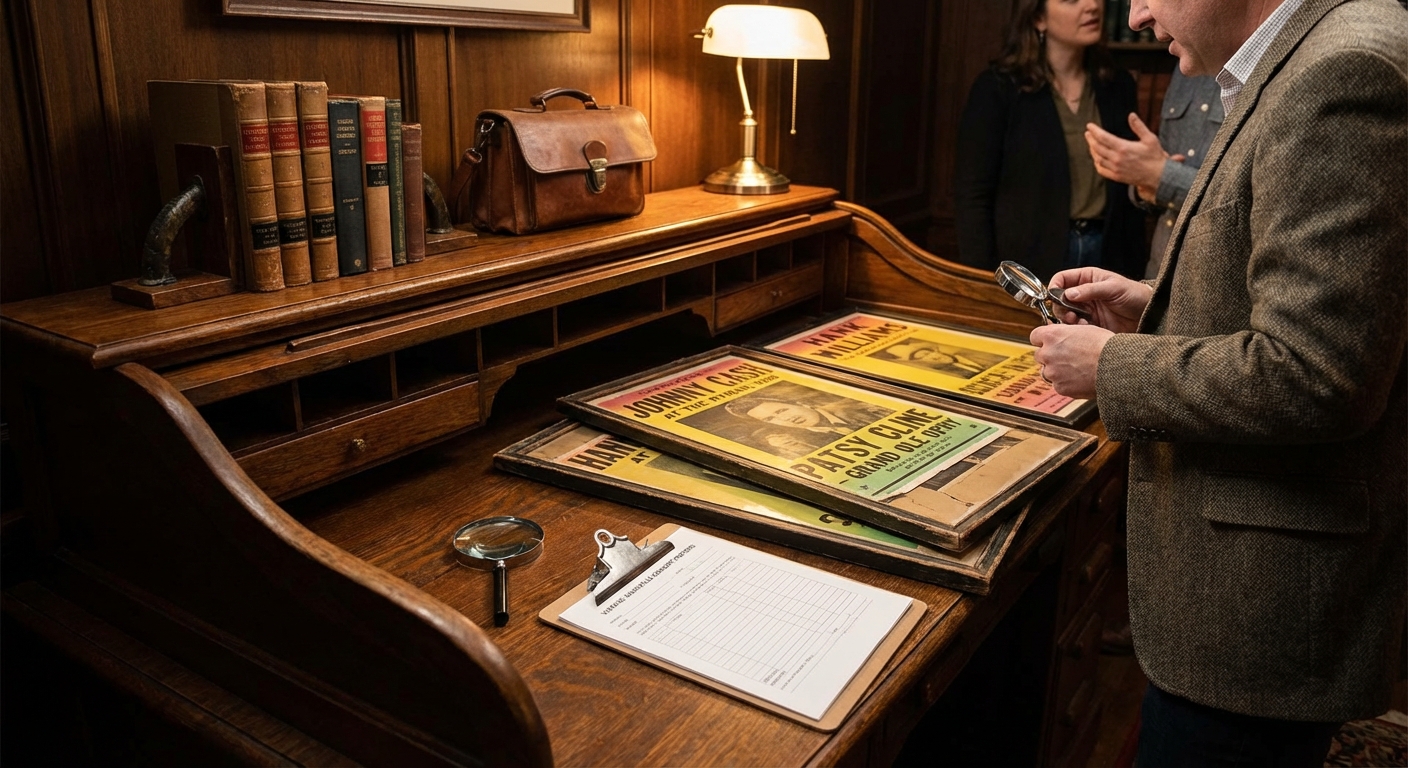
Imagine stumbling upon a dusty box in your grandmother's attic, filled with old ticket stubs and faded photographs. Among them, a vibrant, hand-drawn poster catches your eye – a psychedelic explosion of color advertising a concert by a legendary band, long before they hit the stadium circuit. It's more than just a piece of paper; it’s a tangible echo of a bygone era, a whisper from the heart of music history. These vintage concert posters, particularly from iconic music cities like Nashville, aren't just nostalgic keepsakes; they can hold surprising financial value, a fact many collectors are just beginning to fully appreciate.
The allure of these posters lies in their raw artistic expression and their direct connection to pivotal moments in music. Think of the early days of country music legends or the burgeoning rock scene that pulsed through Nashville's veins. Posters from these eras, especially those advertising groundbreaking performances or featuring iconic artwork, are highly sought after. Authenticating them, however, requires a discerning eye and a methodical approach. It’s not just about recognizing a famous band; it’s about understanding the nuances of print, paper, and period-specific design.
One crucial strategy is to meticulously examine the printing techniques. Early rock posters often employed silk-screening or offset lithography, techniques that leave distinct visual characteristics. Look for the texture of the ink, the registration of colors, and any subtle imperfections inherent to these older methods. For instance, a poorly registered color on a psychedelic poster from the late 60s might actually be a sign of authenticity, reflecting the often-experimental and less precise printing of the time. Conversely, modern digital printing will typically appear too clean and uniform.
Another key area of focus is the paper stock. Vintage posters were printed on a variety of papers, from newsprint to heavier cardstock. The aging process also plays a significant role. Genuine age will manifest as subtle discoloration, brittleness, and sometimes even minor foxing (small brown spots). Be wary of posters that look artificially aged; often, they'll have an unnatural, uniform yellowing or a brittle feel that doesn't align with decades of natural decay. A useful concept here is the principle of provenance, which emphasizes the documented history of ownership and origin. While not always readily available for a casual find, understanding its importance helps in assessing authenticity. If a poster has a documented history of being purchased at a show or passed down through a family, it significantly bolsters its credibility.
In practice, I once examined a poster advertised as an early Jimi Hendrix gig in Nashville. While the band name and date were correct, a closer inspection of the paper revealed a modern, glossy finish and perfectly sharp, digital-esque print registration. The ink also lacked the depth and texture typical of silkscreening from that era. It was a convincing replica, but a replica nonetheless. True authenticity often lies in the slight imperfections and tactile qualities that time and original production methods impart.
When you’re ready to understand the true worth of these sonic artifacts, whether they're tucked away in your own collection or you've just unearthed a potential treasure, seeking a professional appraisal is the most reliable next step. A seasoned appraiser can meticulously examine the physical characteristics, research market comparables, and provide a well-supported valuation. Don't let these pieces of music history remain undervalued; let’s uncover their stories and their worth together.