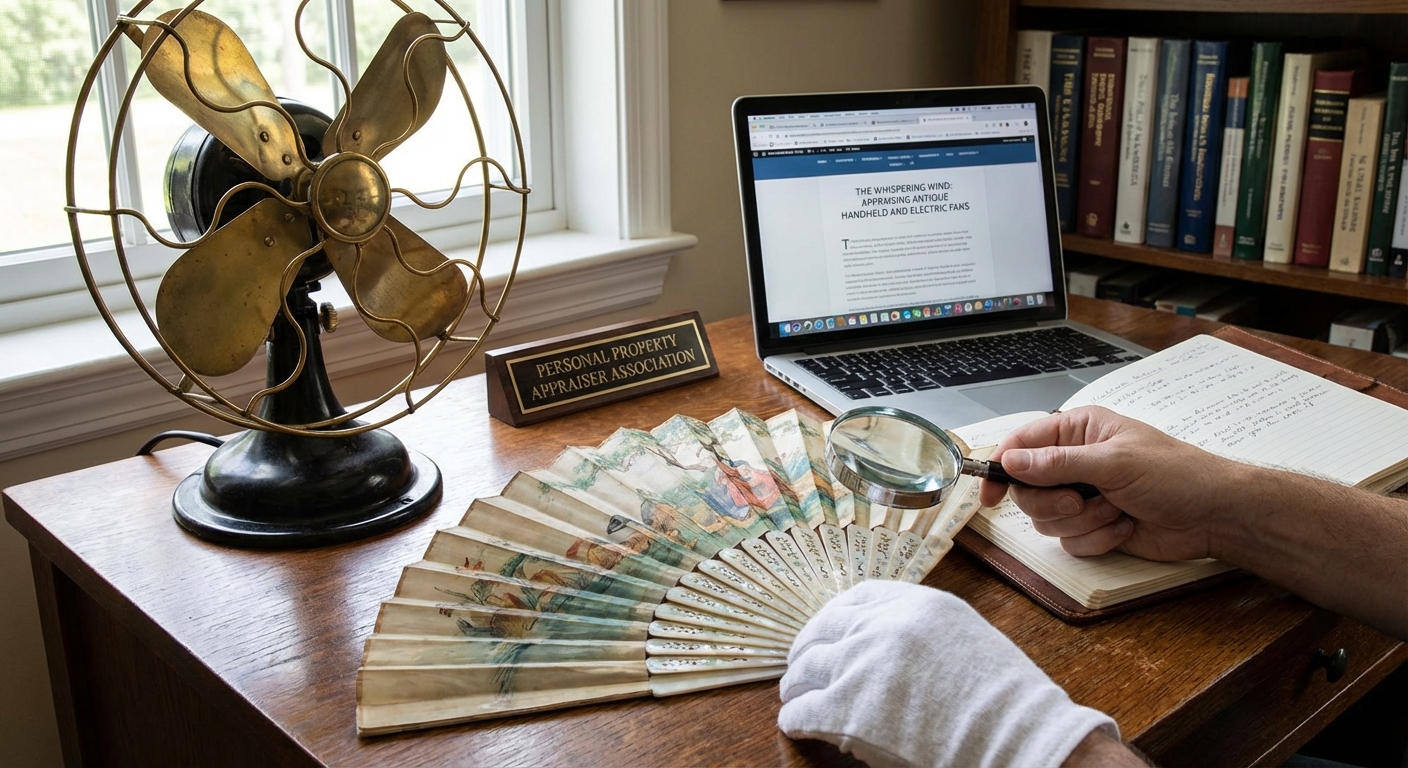
Imagine uncovering a forgotten treasure in your attic, a delicate object that once stirred the summer air for generations past. Perhaps it’s an ornate ivory fan, its painted scenes whispering tales of garden parties and hushed conversations, or a gleaming brass electric fan, a marvel of early industrial design humming with newfound purpose. These aren't just cooling devices; they are artifacts, each with a story and a value that transcends their practical function. As a personal property appraiser, I've had the privilege of examining countless such pieces, and the process of valuing them is a fascinating blend of historical research, material analysis, and understanding market trends.
Appraising antique handheld and electric fans requires a multi-faceted approach. First, condition is paramount. For handheld fans, look for intact panels, secure hinges, and minimal damage to the material, whether it's silk, paper, bone, or wood. A fan with a torn panel or a missing intricately carved segment will significantly impact its value compared to one in pristine condition. Similarly, with electric fans, assess the operational status of the motor, the integrity of the blades, and any rust or corrosion on the housing. Even if an electric fan doesn't currently work, its aesthetic appeal and historical significance can still command interest, but a functioning piece often holds a higher market value.
Next, identifying the maker and period is crucial. Many high-quality fans were produced by specific companies or artisans, and their mark or style can be a significant indicator of value. For handheld fans, research the provenance – where did it come from? Was it a gift, a souvenir, or part of a specific collection? For electric fans, look for manufacturer’s labels, model numbers, or distinctive design elements. This is where the concept of "provenance and authenticity" comes into play; knowing the history and origin of an item adds layers of credibility and desirability. For example, a fan signed by a renowned fan maker from the Belle Époque will naturally be more valuable than a generic, mass-produced piece from the same era.
A third key strategy involves understanding the decorative and historical context. What makes this fan special beyond its function? Is it adorned with hand-painted scenes, intricate lacework, or precious materials like mother-of-pearl? Does it represent a significant technological advancement, like early electric fans with unique safety features or innovative motor designs? The aesthetic appeal, the rarity of the design, and its connection to a particular historical period or cultural movement all contribute to its appraisal value. A fan depicting a historical event or a popular artistic style of its time will likely be more sought after.
In practice, I recently encountered a beautiful Edwardian electric fan. It had a distinctive wire cage guard and a solid mahogany base. While the motor needed a gentle cleaning and lubrication, it spun to life with a surprisingly quiet whir. The manufacturer’s name was barely visible on the motor housing, but a bit of research revealed it was a relatively rare early model from a company known for its innovative electrical appliances. The combination of its good operational condition, unique design, and the maker's relative obscurity in the consumer market placed it in a higher appraisal bracket than a more common, later model.
Ultimately, if you have a fan, handheld or electric, that you believe holds historical or monetary value, the best course of action is to consult a qualified personal property appraiser. We can meticulously examine your piece, research its history and market, and provide you with an accurate and well-supported valuation. Don't let these whispering winds of history remain silent; let their stories and their worth be properly understood.