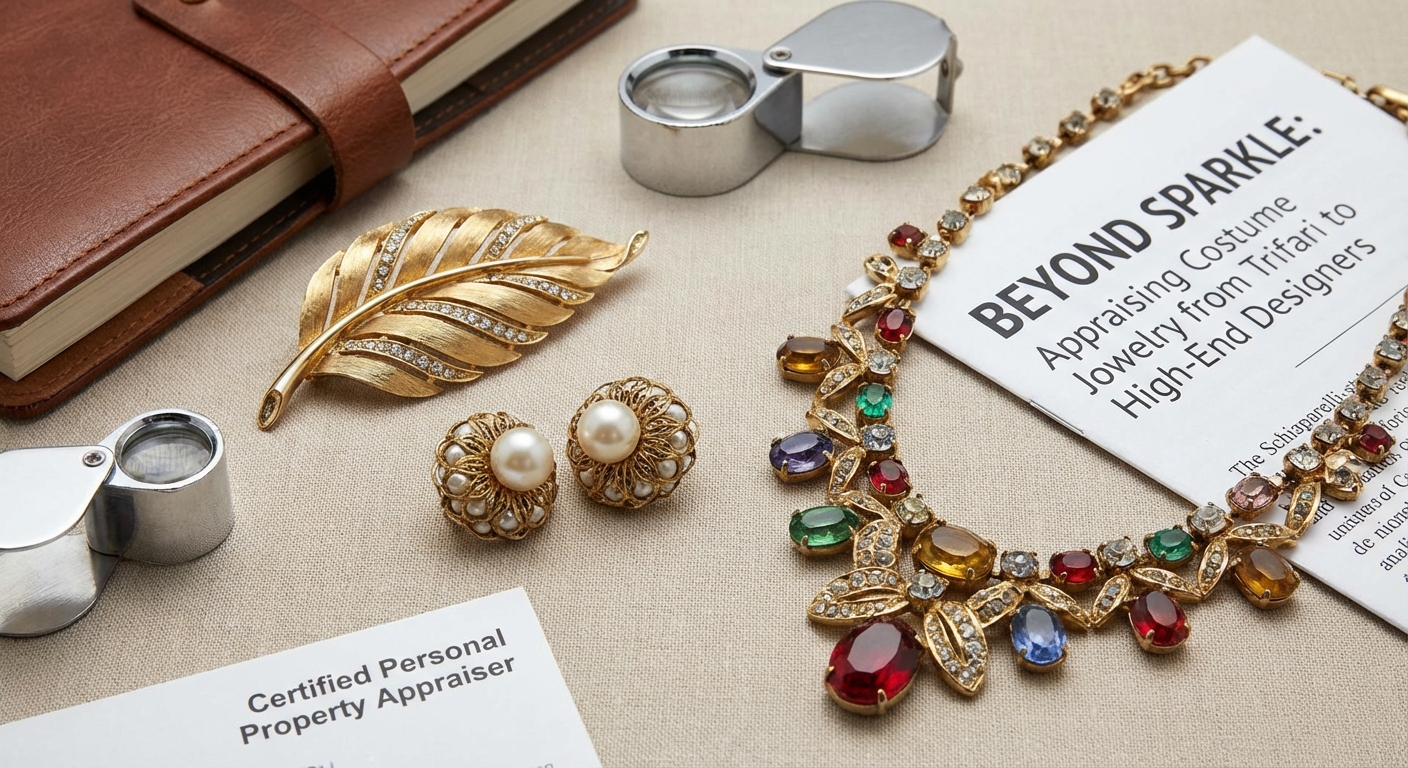
The dusty velvet lining of an inherited jewelry box, often overlooked in favor of the glittering diamonds and precious metals, can hold a treasure trove of its own. I’ve seen it countless times: a client brings in a seemingly unassuming collection, perhaps pieces their grandmother wore daily, and expects them to be of minimal value. Then, with a closer look, we uncover a signed Trifari clip brooch with intricate enameled detailing, or a bold Kenneth Jay Lane necklace that was a statement piece in its era. These aren't just trinkets; they are wearable art, testaments to design, and often hold significant value beyond their material components.
When appraising costume jewelry, the approach shifts from focusing solely on intrinsic material worth to understanding design, historical context, and maker’s mark. One crucial strategy is to identify the maker's mark. Many costume jewelry houses, from the iconic Trifari and Coro to more contemporary high-end designers like Chanel and Dior, stamped their creations. This mark is your first clue to provenance and potential value. A clear, legible mark immediately elevates the item’s significance. Think of it like spotting a signature on a painting – it tells you who created it and, by extension, its place in art history.
Another vital strategy is examining construction and materials. While not made of precious metals, quality costume jewelry often features robust construction. Look for secure settings for stones (even if they are glass or paste), good plating that hasn't chipped or worn away excessively, and well-executed enameling or other decorative techniques. The weight and feel of a piece can also be indicative of quality. A flimsy, poorly made piece, even if it looks impressive from afar, will likely have a lower appraisal value than a well-crafted one. This relates to the concept of perceived value, where the quality of craftsmanship and design significantly influences how an item is valued by collectors and the market.
A practical consideration is understanding the prevailing aesthetic of different eras. The bold, colorful designs of the 1950s and 60s, for instance, are highly sought after by collectors today. A signed Miriam Haskell necklace, with its intricate wirework and faux pearls, might command a higher price than a similar-looking piece from a lesser-known manufacturer, simply due to its historical significance and artistic merit.
In practice, I recall appraising a collection that included several unsigned brooches. They were attractive, but without a maker's mark, their value was limited. However, one brooch, upon closer inspection, had a very subtle, almost hidden stamp. It turned out to be a rare piece from a designer known for a particular style of floral motif, and its value was significantly higher than the others, simply because of that tiny, identifying mark and the associated rarity.
Ultimately, appraising costume jewelry is about looking beyond the superficial sparkle. It’s about research, understanding the craftsmanship, and recognizing the designer’s intent and historical impact. If you have pieces you’re curious about, don’t dismiss them. Bring them in for an appraisal; you might be surprised at the story they have to tell and the value they hold.