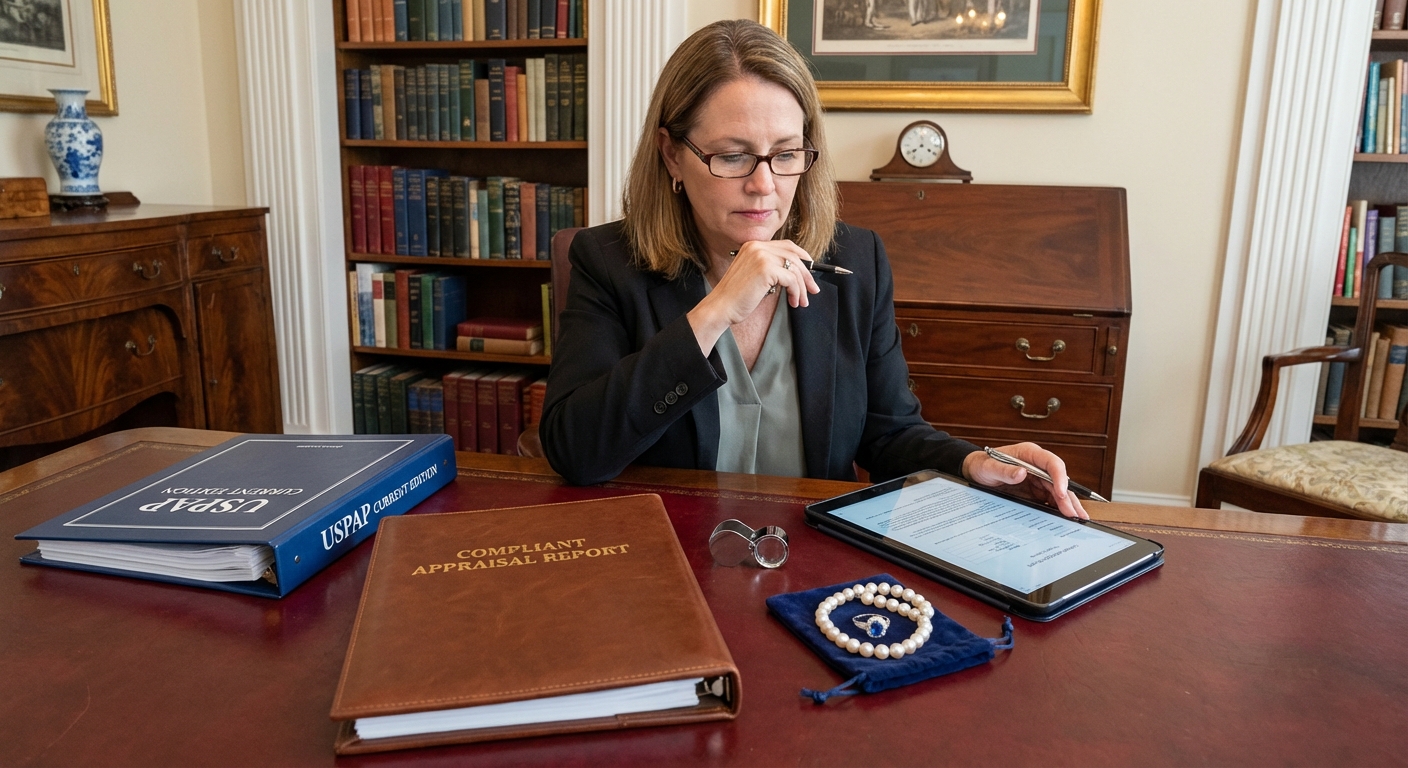
Imagine you've just received a beautifully presented appraisal report for a cherished family heirloom. It details the item's history, condition, and value, offering a sense of peace of mind. But what if, down the line, that appraisal is scrutinized? Perhaps for insurance claims, estate division, or even legal proceedings. The clarity and accuracy of that document become paramount, and that's where the Uniform Standards of Professional Appraisal Practice, or USPAP, comes into play. As appraisers, our commitment to USPAP isn't just about following rules; it's about building trust and ensuring the integrity of our work.
Mastering USPAP compliance in your appraisal reports is crucial for providing defensible and credible valuations. It’s about creating a clear, unambiguous record of your appraisal process and conclusions. One foundational strategy is thorough documentation of your scope of work. This means clearly defining the purpose of the appraisal, the intended users, and the extent of your research and analysis. For example, if you're appraising a vintage diamond ring for insurance replacement, your scope of work should explicitly state that the appraisal is for replacement cost new and will include a description of the materials, quality of the stones, and craftsmanship. This initial step sets the stage for everything that follows and provides a roadmap for your entire appraisal.
Another vital element is the clear articulation of your valuation methodology. USPAP requires you to explain how you arrived at your value conclusion. This isn't just stating a number; it's demonstrating your reasoning. For a collection of antique pocket watches, this might involve detailing the specific comparable sales you used, the adjustments you made for condition, rarity, and provenance, and the rationale behind the chosen approach (e.g., market data approach). This level of transparency allows any user of the report to understand your logic and assess its validity. Think of it like explaining your calculations in a math problem – the answer is important, but showing your work is what proves understanding and accuracy.
Furthermore, USPAP emphasizes the importance of identifying and disclosing any potential conflicts of interest. This aligns with the ethical framework of appraisal practice, ensuring impartiality. For instance, if you have any past or present relationship with the owner of the property being appraised, or if you stand to benefit financially beyond your agreed-upon fee, this must be disclosed upfront in the report. This commitment to objectivity is a cornerstone of professional appraisal. This practice echoes the principles of evidence-based practice, where conclusions are supported by verifiable data and objective analysis, minimizing bias.
In practice, I recall a situation where an estate needed to divide a diverse collection of art and decorative objects. The initial appraisal report was well-written but lacked specific detail on the comparable sales used for some of the more unique items. To ensure USPAP compliance and to satisfy the heirs, I revisited my research, added detailed citations for each comparable sale, and clearly explained the adjustments made. This extra step transformed a good report into a truly robust and defensible document, preventing potential disputes.
Ultimately, USPAP compliance is about more than just meeting a standard; it's about delivering value through integrity. For anyone seeking an appraisal, whether for personal knowledge, financial planning, or legal purposes, look for an appraiser who clearly demonstrates their adherence to USPAP. This commitment is your assurance of a thorough, objective, and reliable valuation that you can trust.