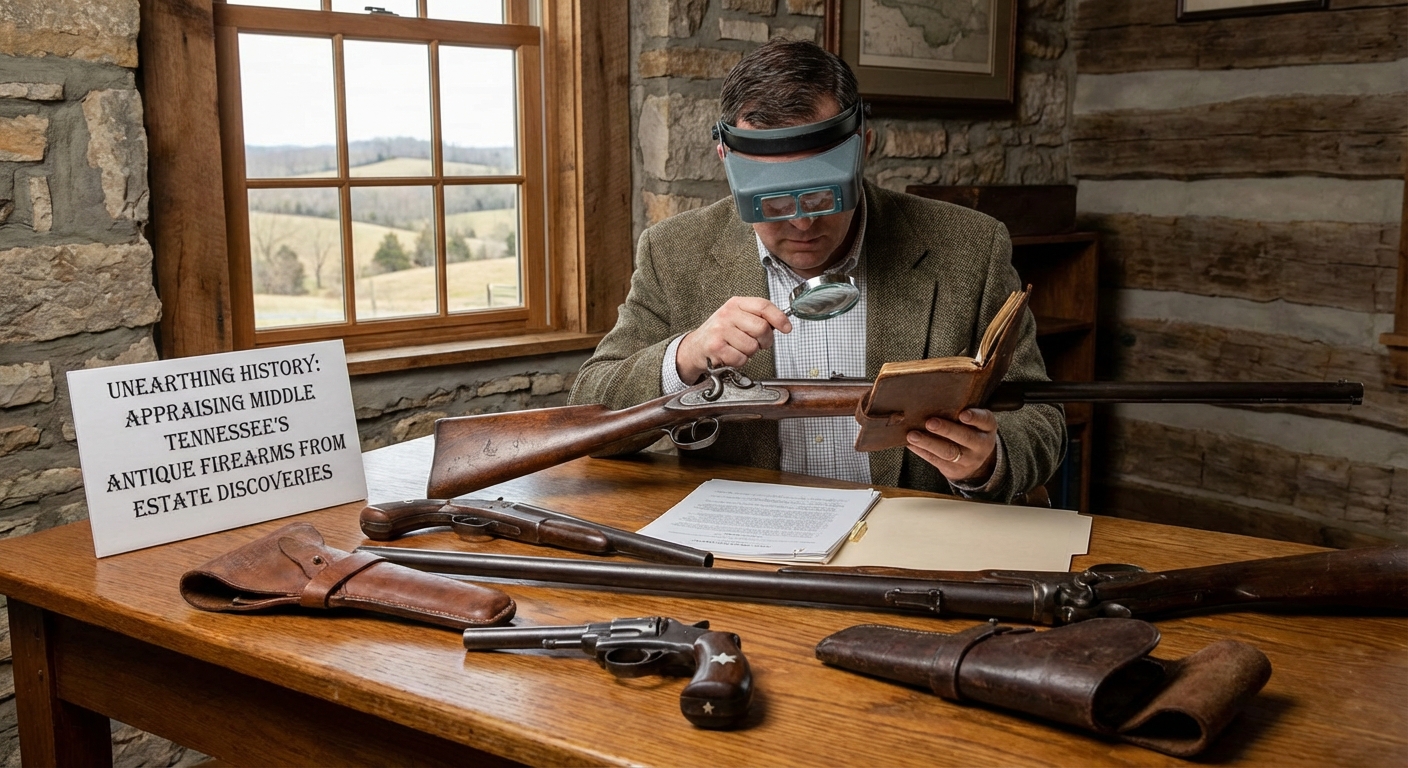
The musty scent of aged wood and oil, a familiar perfume to many in Middle Tennessee, often heralds a significant discovery. Imagine a dusty attic, untouched for decades, where a long-forgotten trunk yields not just moth-eaten clothes, but a meticulously preserved long rifle, its barrel gleaming faintly in the dim light. Or perhaps a family clearing out a beloved grandparent's home stumbles upon a pair of ornate dueling pistols tucked away in a hidden compartment. These are the moments that stir excitement, transforming a routine estate cleanout into a historical treasure hunt. As an appraiser, these are the discoveries that truly make my work come alive, connecting tangible objects to the rich tapestry of our region's past.
When faced with such an artifact, the appraisal process begins with a deep dive into its provenance. Understanding where it came from, even anecdotally, is paramount. Was it passed down through generations? Did it have a known history of use? This initial information, however informal, forms the bedrock of our investigation. Next, we meticulously examine the firearm itself. This involves a careful, non-invasive inspection, focusing on condition, maker's marks, serial numbers, and any unique embellishments. For example, distinguishing between a mass-produced piece and a handcrafted firearm can dramatically impact value. We'll look for signs of wear that tell a story, but also for damage that might detract from its historical integrity.
One crucial strategy is to research the period and manufacturer. Middle Tennessee has a storied history, particularly during the Civil War and the frontier eras. Identifying if a firearm dates from a significant historical period, or if it was made by a renowned gunsmith of the time, adds layers of value. For instance, a Kentucky rifle, a staple of early American firearms, gains significant appreciation if it can be definitively attributed to a specific, respected maker from the 19th century. We often employ the principle of substitution, considering what it would cost to acquire a comparable item in similar condition and historical context, though for truly unique historical pieces, this becomes more of a theoretical exercise.
Another key step involves assessing originality versus restoration. Has the firearm been modified or repaired over time? While some repairs might be necessary for preservation, extensive alterations can diminish its historical authenticity and, consequently, its market value. For instance, a firearm with its original wood stock intact and showing period-appropriate patina will generally be valued higher than one with a replaced stock or refinished metal.
In practice, I recently encountered a beautiful percussion revolver during an estate appraisal. The family believed it to be a simple family heirloom. However, upon close examination, I identified a subtle maker's mark and a specific design feature common to a particular, albeit less common, 1850s manufacturer. Further research confirmed its rarity and its potential connection to a local historical event. This discovery significantly elevated its appraisal value beyond what the family had anticipated.
Ultimately, appraising antique firearms from estate discoveries is about more than just assigning a monetary figure. It's about uncovering stories, understanding craftsmanship, and respecting the historical significance of these objects. If you've discovered antique firearms in your home, seeking a professional appraisal is the essential next step. A qualified appraiser can provide an accurate valuation, offer insights into the item's history, and guide you on its potential market.