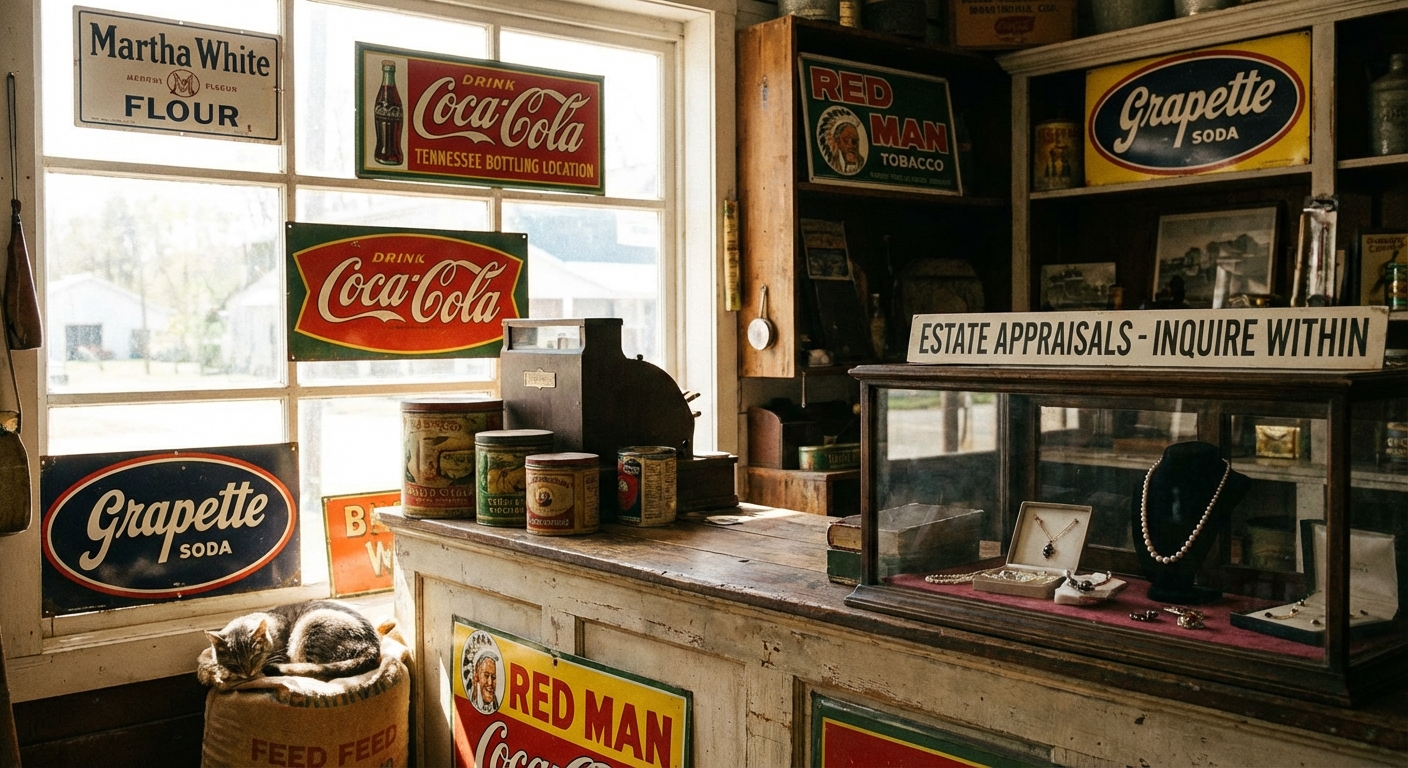
I remember a recent appraisal for a client in Franklin. She’d inherited a dusty box from her grandfather’s attic, filled with what she initially dismissed as old junk. Tucked amongst faded photographs and yellowed letters were tin signs advertising Coca-Cola, a worn wooden crate for Dr. Pepper, and a handful of cigar box labels. She’d almost donated them, but a nagging curiosity, a whisper of the past, made her pause. It’s these moments, these unexpected discoveries, that truly highlight the enduring charm of vintage advertising, especially here in Middle Tennessee, a region steeped in history and the echoes of bustling general stores.
These aren't just old advertisements; they are tangible fragments of our collective memory, each piece telling a story of a time when a trip to the general store was a social event, a hub of community life. The vibrant colors, the whimsical illustrations, the bold typography – they all speak to a different era of marketing, one built on direct appeal and a certain unpretentious honesty. Think of the iconic Coca-Cola signs, their familiar script promising refreshment, or the charming depictions of everyday life on early soap packaging. These items evoke a sense of nostalgia, a longing for simpler times, and that’s precisely what makes them so appealing to collectors today.
For those looking to explore this fascinating niche, there are a few practical strategies to consider. Firstly, focus on condition. Just like with any collectible, the better the condition, the higher the value. Look for pieces with minimal rust, fading, or damage. A small scratch might be forgivable, but significant dents or missing pieces can drastically reduce desirability. For example, a pristine tin sign advertising Moxie will always command a higher price than one that’s heavily creased and chipped.
Secondly, research the manufacturer and the era. Certain brands and periods are more sought after than others. Companies like Coca-Cola, Pepsi, and early pharmaceutical brands often have a dedicated following. Understanding when an advertisement was produced can also be key. Early 20th-century advertising often has a distinct artistic style that collectors appreciate. Think about the shift from early, hand-drawn illustrations to more stylized lithography. This evolution is a significant factor in value.
Thirdly, consider the rarity and provenance. Was this a limited run item, or something mass-produced? Did it come from a particularly notable general store or business? The story behind the piece, its history, can add considerable appeal. This ties into the scarcity principle in collecting, where limited availability drives demand. A rare, early advertisement for a local Tennessee brand, with a documented history, could be incredibly valuable.
In practice, I recently appraised a collection for a retired teacher from Murfreesboro. He had a small hoard of old seed packets from the 1930s and 40s. Initially, he thought they were worthless. However, by identifying the specific seed companies, many of which were prominent in the agricultural landscape of the time, and noting their excellent, vibrant condition, we were able to establish significant value. The detailed botanical illustrations were particularly appealing to a specific segment of collectors.
So, if you find yourself sifting through old boxes, or perhaps stumbling upon treasures at a local estate sale, take a moment to appreciate the stories these vintage advertisements tell. They are more than just paper and ink; they are windows into our past. If you're considering selling or simply want to understand the worth of these nostalgic gems, don't hesitate to seek a professional appraisal. A certified appraiser can help you uncover the true value of these echoes from the general store.