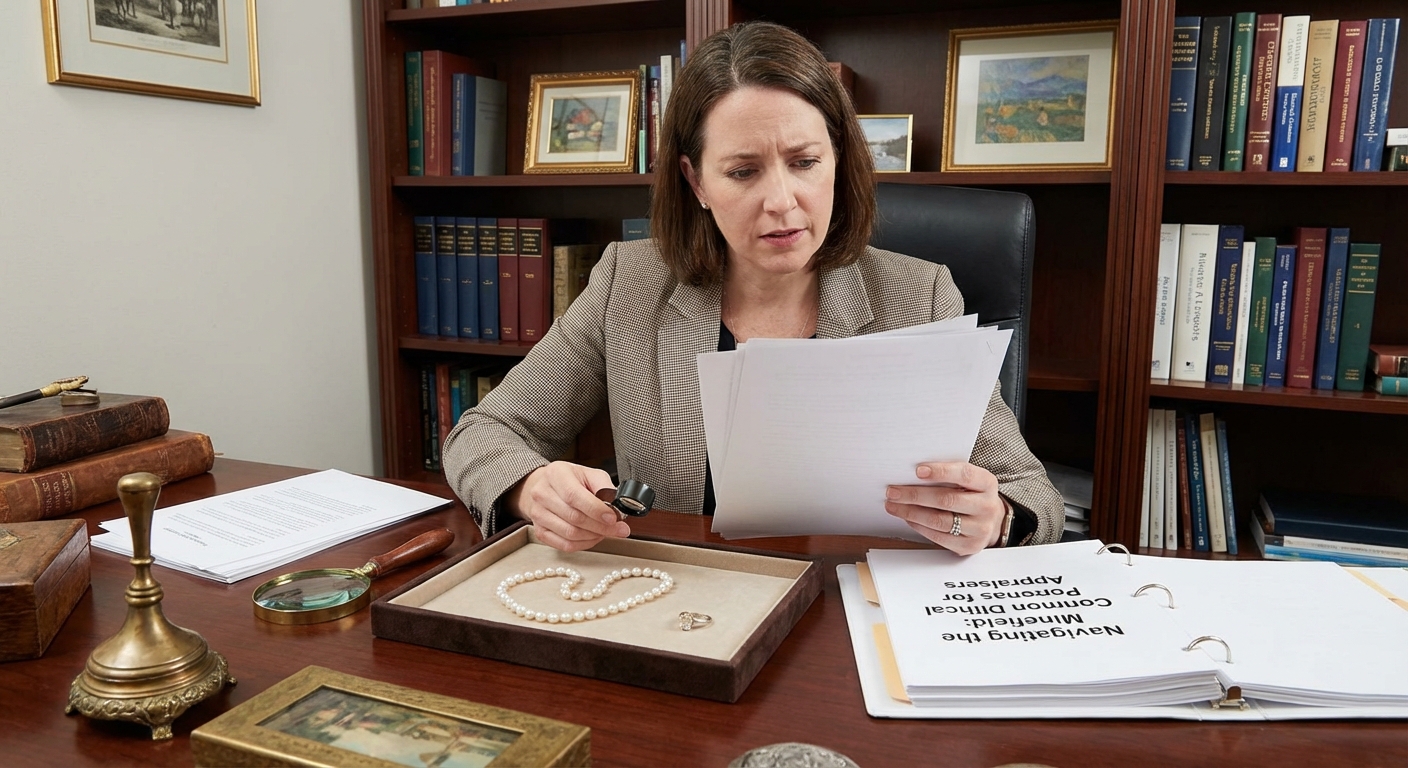
The phone rings, and it’s Mrs. Gable. She’s inherited her grandmother’s exquisite Victorian mourning brooch, a piece she cherishes for sentimental reasons. She’s not looking to sell, but rather to understand its value for insurance purposes. As I begin to research, I discover the brooch contains a small, yet significant, collection of black opals, a gemstone known for its volatility and potential for fracture. The challenge? Mrs. Gable has a deep emotional attachment to the piece, and the opal’s inherent fragility, while not diminishing its historical significance or aesthetic appeal, could impact its insurance valuation and, more importantly, its long-term preservation. How do I present this delicate information without undermining her affection for the heirloom? This is just one instance where the path of a personal property appraiser can feel like navigating a minefield.
Ethical considerations are the bedrock of our profession, ensuring trust and integrity. One of the most persistent dilemmas revolves around confidentiality. We often gain intimate knowledge of our clients' possessions and financial situations. Maintaining strict confidentiality, as outlined in professional appraisal standards, is paramount. This means safeguarding client information and appraisal reports from unauthorized access, and never discussing specific client details or appraisal findings with anyone outside of the direct client relationship, unless legally mandated. Imagine a scenario where a disgruntled former business partner, Mr. Finch, requests an appraisal on a shared collection, hoping to use it as leverage in a legal dispute. My ethical obligation is to provide an unbiased appraisal solely for Mrs. Gable (or whoever the designated client is), and to refuse any request that compromises confidentiality or presents a conflict of interest.
Another common hurdle is avoiding conflicts of interest. This requires a clear understanding of our role as objective valuers. It’s tempting, especially when building a business, to accept referral fees or commissions for sales that stem from an appraisal. However, this directly compromises our impartiality. A robust strategy here is to establish a clear policy before accepting an assignment: no financial interest in the sale or disposition of the appraised property. If a client expresses interest in selling an item, my role is to provide the appraisal, and then perhaps offer a referral to a reputable dealer or auction house, but never to participate in the transaction myself. For instance, if I appraise a collection for Mr. Henderson and he later asks if I can connect him with a buyer I know, I can provide a contact, but I must decline any finder's fee or commission. This aligns with the principle of independence, a core tenet of ethical appraisal practice, ensuring our valuations are driven by market data, not personal gain.
Furthermore, competence is an ethical imperative. We must only accept assignments for which we have the requisite knowledge and experience. This means knowing our limits. While I have extensive experience with jewelry, if a client presents me with a rare Renaissance tapestry, my ethical duty is to acknowledge that it falls outside my expertise. I would then politely decline the assignment and, if possible, recommend a specialist in that field. This is not a failure, but a demonstration of professionalism and respect for the client’s needs. A real-world vignette: a client, Ms. Dubois, brings me a seemingly simple antique clock. Upon closer inspection, I recognize it as an exceptionally rare automaton clock, requiring specialized horological knowledge. I inform Ms. Dubois that while I can provide a general overview, a full, accurate appraisal requires a specialist, and I provide her with the contact information for one.
In practice, navigating these ethical complexities often boils down to clear communication and unwavering adherence to professional standards. When seeking an appraisal, be it for insurance, estate settlement, or simply curiosity, look for appraisers who are transparent about their qualifications, fees, and ethical guidelines. A qualified appraiser will be upfront about potential conflicts and will always prioritize your best interests through unbiased, well-supported valuations.