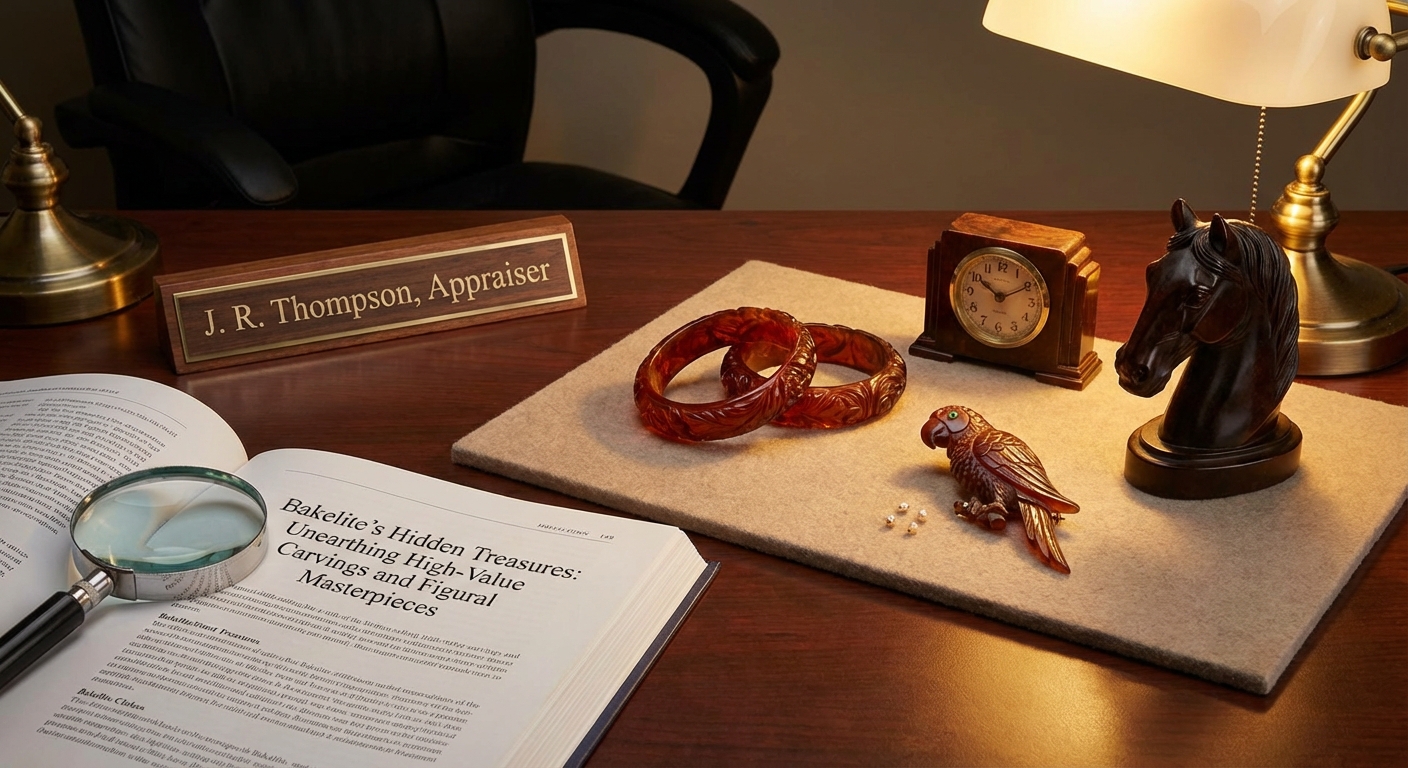
Imagine stumbling upon a dusty box in your grandmother’s attic, filled with what looks like old, brightly colored plastic bangles and brooches. You might dismiss them as costume jewelry, destined for a yard sale. But what if, amongst those cheerful, everyday pieces, lay a treasure trove of carved Bakelite, whispering tales of a bygone era and holding significant value? I’ve seen this happen more times than I can count, transforming a simple decluttering into a remarkable discovery. Recently, a client, Mrs. Eleanor Vance, brought in a collection of what she thought were mere trinkets. Tucked away were several carved figural pieces – a playful cat, a whimsical dancer, and a surprisingly detailed bird – that, upon closer inspection, were indeed rare and highly sought-after Bakelite creations. The market for these pieces is surprisingly robust, driven by collectors who appreciate the artistry and historical significance of early plastics.
Unearthing these hidden treasures requires a keen eye and a bit of insider knowledge. One of the most effective strategies is to look beyond the color. While vibrant reds, greens, and yellows are iconic for Bakelite, don't overlook subtler hues like butterscotch, cream, or even marbled effects. These less common colors can often indicate rarer, more desirable pieces, especially when combined with intricate carving. Think of it as a painter using a less common pigment for a particularly striking effect. Another crucial strategy is to examine the craftsmanship and subject matter. Simple, molded pieces are common. However, truly high-value Bakelite often features detailed hand-carving, depicting animals, mythological figures, or even miniature portraits. The more intricate and unique the carving, the higher its potential value. Consider the playful cat Mrs. Vance had; its etched whiskers and delicately curved tail spoke volumes about the carver's skill, elevating it far beyond a mass-produced item.
A useful framework for understanding value is the scarcity-utility-desirability principle. Scarcity refers to how rare the item is. Utility relates to its practical use or aesthetic appeal. Desirability is the emotional connection collectors have with it. High-value Bakelite carvings tick all these boxes, especially when they combine rarity with exceptional artistic merit.
In practice, I recently appraised a small collection for Mr. Arthur Finch, who inherited a box from his aunt. He’d almost tossed a set of carved animals, thinking they were cheap toys. But upon seeing the intricate detail on a tiny, carved elephant, I recognized its potential. It wasn't just a carved elephant; it was a miniature masterpiece, showcasing nuanced sculpting and a unique patina that only time and careful handling could achieve. This single piece significantly boosted the overall appraisal value of his inherited items.
So, if you find yourself sifting through old jewelry boxes or antique store finds, don't dismiss those old plastic pieces too quickly. Pay attention to the details, the colors, and the subject matter. When you’re ready to understand what you might have, and whether those cheerful plastic pieces are indeed valuable heirlooms, reach out for a professional appraisal. It's the surest way to uncover the true worth of Bakelite's hidden treasures.