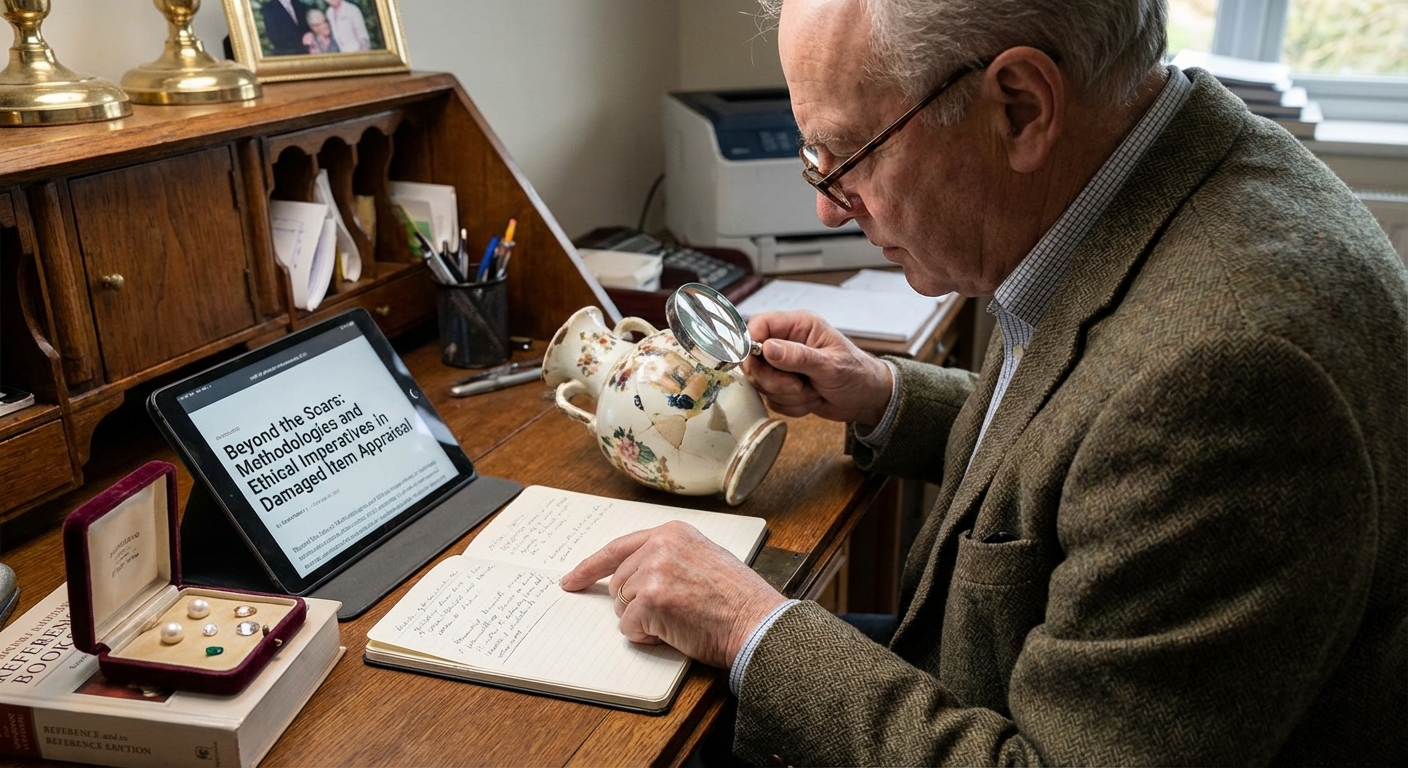
A delicate porcelain doll, its bisque face marred by a hairline fracture that runs from its rosy cheek to its tiny chin, sits on my appraisal table. It’s a cherished heirloom, once belonging to Eleanor Vance’s grandmother, and now Eleanor wants to understand its true value, scars and all. Similarly, a vintage engagement ring, its platinum band bent from what can only be described as a dramatic rescue, and a valuable Persian rug with a significant water stain, all present unique challenges. These aren’t just objects; they carry stories, often marked by the very imperfections that make them vulnerable. As an appraiser, my role extends beyond simply noting damage; it’s about understanding its impact on value and approaching the task with both scientific rigor and unwavering integrity.
Assessing damaged items requires a nuanced approach, moving beyond a simple percentage deduction. One crucial methodology involves a detailed condition report. This isn't just a list of flaws; it’s a meticulous documentation of each imperfection, its extent, and its potential for repair. For that porcelain doll, I’d note the precise length and width of the fracture, whether it's stable or actively worsening, and if there are any associated chips or losses. This detailed record becomes the foundation for determining marketability and potential restoration costs.
Another essential strategy is comparative market analysis, adapted for condition. While we always look for comparable sales, with damaged items, we seek sales of similar items in similar condition. This means hunting for records of damaged dolls, bent rings, or stained rugs. It might be harder to find, but it’s crucial. If a pristine example of Eleanor’s doll sold for $1,000, and a similar doll with a comparable fracture sold at auction for $300, that $700 difference provides a tangible starting point. We also consider the "cost of repair" approach, estimating the expense of professional restoration and factoring in whether the restoration would likely recoup its cost by increasing the item’s value. For the bent ring, assessing the cost of straightening and re-polishing, and then evaluating if the resulting value justifies the expense, is key.
Underpinning these practices is the concept of "diminution of value," a core principle in appraisal theory. This framework acknowledges that damage doesn't just subtract a fixed amount; it can disproportionately reduce an item’s desirability and market appeal. A small scratch on a rare painting might have a far greater impact on its value than a more significant, but less aesthetically jarring, flaw on a common item.
In practice, I recently appraised a collection of antique books for Mr. Henderson. One volume, a first edition, had a torn dust jacket and foxing on the pages. While the book itself was rare, the damage significantly impacted its desirability to serious collectors who prioritize pristine condition. I couldn't simply deduct a flat fee. Instead, I researched sales of similar first editions with comparable jacket damage and significant foxing, identifying a pattern where such items sold for approximately 40-50% less than their unblemished counterparts. This informed my valuation, reflecting the market's reality.
Ultimately, appraising damaged items is about more than just numbers; it's about transparency and informed decision-making. My ethical imperative is to provide an honest assessment, acknowledging both the inherent value of the object and the impact of its imperfections. My advice to anyone seeking an appraisal for a damaged item is straightforward: be upfront about the damage and seek an appraiser who demonstrates a clear, methodical approach to assessing it. A professional appraisal should not shy away from imperfections but rather incorporate them into a comprehensive valuation, offering you a clear understanding of your treasured possession’s true worth.