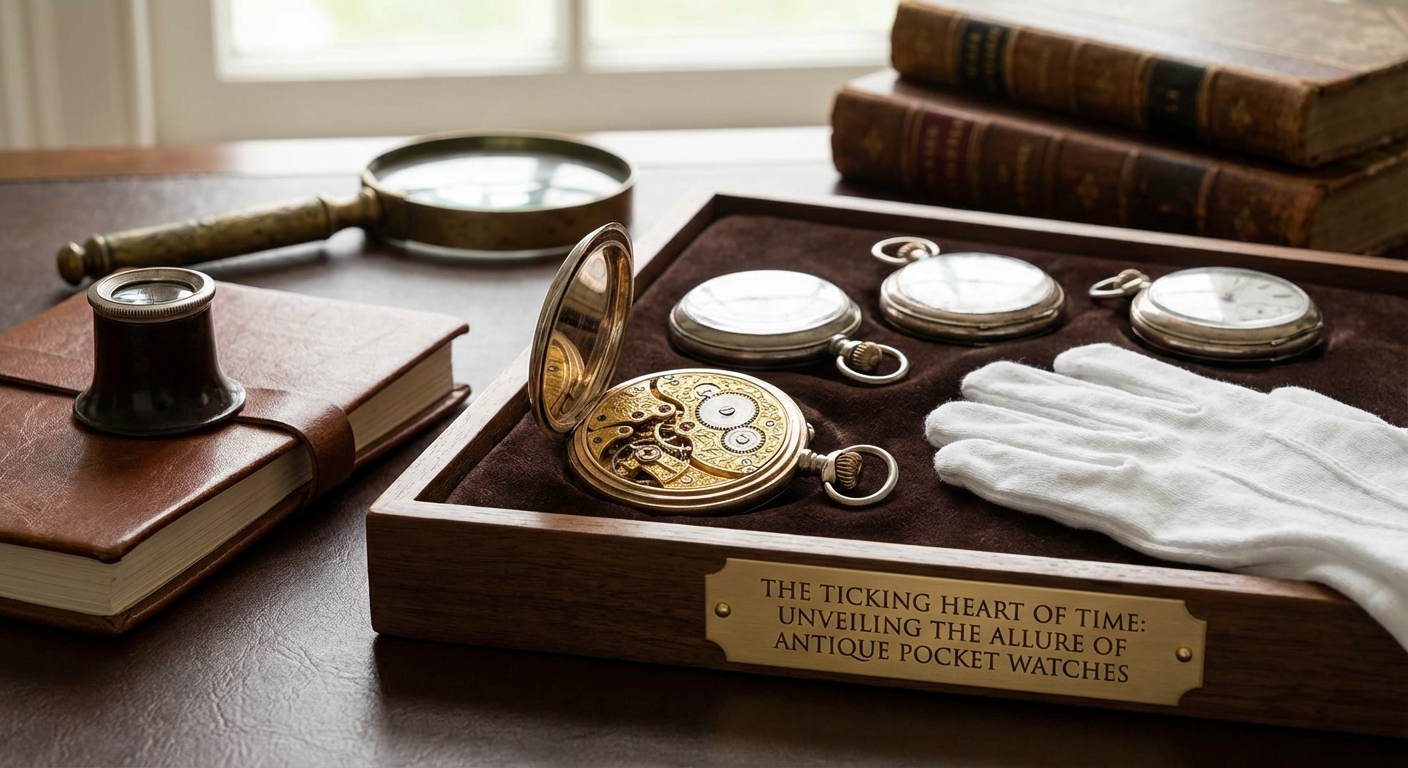
Imagine walking into a dusty antique shop, the air thick with the scent of aged wood and forgotten stories. Your fingers brush against a velvet-lined case, and there it lies: a pocket watch, its silver case intricately engraved, its face bearing the elegant script of a bygone era. You can almost hear the soft tick-tock, a whisper from the past. This isn't just a timepiece; it's a miniature marvel of engineering and artistry, a tangible connection to lives lived long before ours. I see this fascination often, whether it’s a family heirloom like Bartholomew’s grandfather's watch, passed down through generations, or a serendipitous find at an estate sale. The allure of antique pocket watches is undeniable, a blend of mechanical wonder and historical significance.
When considering the value of these timekeeping treasures, several factors come into play. First, condition is paramount. A watch that has been meticulously maintained, with a clean dial, intact case, and a movement that runs reliably, will naturally command a higher price than one that is scratched, dented, or non-functional. Even minor cosmetic issues can impact desirability. For instance, a small ding on the case might be easily overlooked by a casual observer, but for a collector, it can be a significant detractor.
Second, provenance and rarity are crucial. Does the watch have a known history? Was it owned by someone notable, or is it a particularly rare model from a celebrated manufacturer like Patek Philippe or Waltham? A documented history, even a simple one detailing its ownership within a family, adds a layer of narrative that enhances its appeal. Think of Eleanor’s watch, which her great-aunt brought over from Europe; knowing that story adds immeasurable sentimental and market value. Rarity, of course, is quantifiable. A limited production run or a unique complication can significantly boost a watch's desirability.
Third, materials and craftsmanship are key indicators. The quality of the gold or silver used, the intricacy of the engraving, and the complexity of the movement itself all contribute to its worth. A finely guilloché dial, for example, speaks to a level of detail and skill that is highly valued. The movement’s architecture, its jeweling, and any special features like a minute repeater or perpetual calendar all contribute to its technical merit and, consequently, its value.
In practice, I recently appraised a beautiful hunter-case pocket watch for a client, Mr. Henderson. It was a silver piece from the late 19th century. While the exterior was in good shape, the movement was dirty and not running. We discussed the concept of "functional obsolescence" in antique items – meaning, even if the core design is sound, the passage of time and wear can render it less functional and thus less valuable in its current state. We determined that a professional cleaning and service would be necessary to restore its functionality, which would then significantly increase its market value. The client decided to proceed with the service, understanding that the investment would be recouped in the appraisal.
When you're ready to understand the true value of your antique pocket watch, whether it’s a treasured family heirloom or a recent acquisition, the best course of action is to seek a professional appraisal. I recommend gathering any documentation you have, such as original boxes or receipts, and then scheduling an appointment with a certified appraiser. They can meticulously examine the watch, considering its condition, rarity, materials, and historical significance, to provide you with an accurate and well-supported valuation.