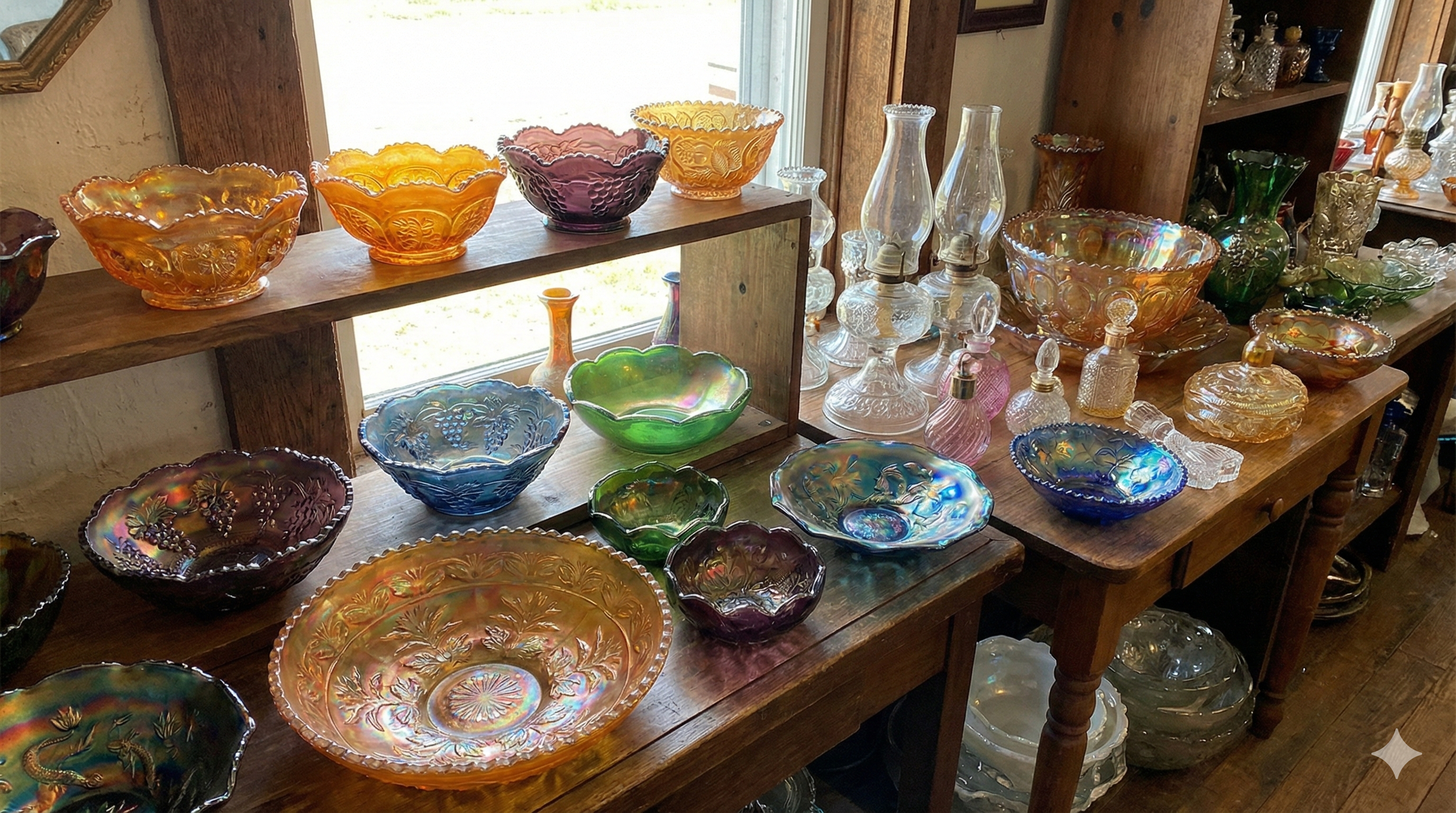
I remember a call from a gentleman named Arthur, who’d inherited his grandmother’s attic treasures. He’d sifted through dusty boxes, convinced he had nothing of value, until a peculiar, iridescent bowl caught his eye. It had a swirling, almost iridescent sheen, unlike anything else he’d seen. Arthur was about to donate it, thinking it was just old knick-knacks, but something made him pause. That pause, that moment of curiosity, is often the genesis of a fascinating discovery, especially when it comes to Middle Tennessee’s obsession with Carnival glass.
Carnival glass, with its vibrant, metallic luster applied over pressed glass, enjoyed a surge in popularity in the early 20th century. While its production was widespread across the US, certain factories and patterns hold particular appeal for collectors, and understanding these nuances is key to unearthing the truly rare finds. For those in Middle Tennessee, this often means looking for specific patterns that were particularly popular in the region.
One of the most effective strategies for identifying valuable Carnival glass is pattern recognition. While many patterns are relatively common, some, like the Fenton Hobnail, Holly, or Peacock patterns, are always in demand. However, the real gems are often less common. For instance, the Northwood Grape pattern, especially in rarer colors like Amethyst or Ice Blue, can fetch significant prices. Don’t just look at the overall shape; examine the details. Are there intricate leaves, grapes, or animals molded into the glass? These details are the signature of a pattern. A quick online search for "antique Carnival glass patterns" and comparing what you have to reputable databases can be an excellent starting point.
Another crucial element is color. While orange and green were the most produced colors, rarer hues like Amethyst, Cobalt Blue, Marigold, and the highly sought-after Ice Blue or Peach Opalescent can dramatically increase an item's value. The way the iridescent finish interacts with the base color is also important. Sometimes, the finish might be more concentrated on certain areas, or have a unique shimmer. Think of it like a painter’s palette; the combination of the base color and the applied luster creates the final effect.
Finally, condition is paramount. Like any collectible, wear and tear can significantly impact value. Look for chips, cracks, or significant scratches on the iridescent finish. Even minor imperfections can detract from the desirability of a piece. However, don't dismiss a piece solely based on minor flaws; sometimes, the rarity of the pattern or color can outweigh minor damage. This relates to the concept of the "collector's market," where demand for specific, hard-to-find items can sometimes tolerate minor imperfections.
I recall an appraisal for a woman named Beatrice, who brought in a seemingly unremarkable footed bowl. It was a common pattern, and in a common color. However, upon closer inspection, I noticed a very subtle, almost hidden motif within the pattern that was characteristic of a very early, less common production run from Indiana Glass. It wasn't a flashy piece, but its rarity made it a significant find for a collector.
If you’re holding onto pieces that pique your interest, whether they were passed down or discovered in a local antique shop, the best approach is to get a professional appraisal. Don’t let curiosity go unchecked; let an experienced appraiser help you understand the true story and value of your carnival glass.