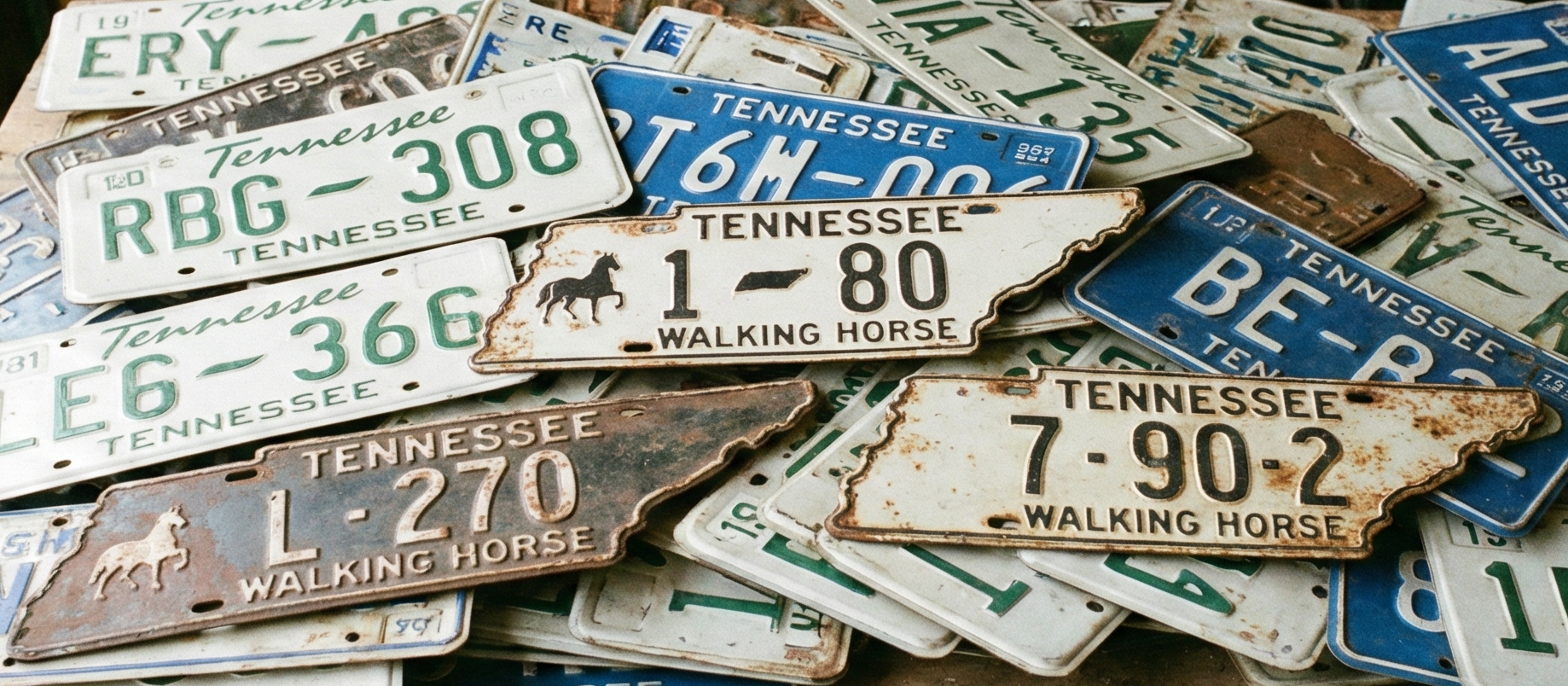
The other day, old Mr. Abernathy from Franklin brought in a dusty box from his attic. Inside, nestled amongst yellowed newspapers, were a handful of tarnished metal plates. He’d kept them, he said, because his dad had been so proud of his 1950s Ford. Most people would see them as mere scrap metal, but to me, they were a tangible piece of Tennessee history. One plate, a deep, faded blue with bold white lettering advertising the Great Smoky Mountains National Park, immediately caught my eye. It wasn't just a license plate; it was a story waiting to be told, a potential treasure hiding in plain sight.
This is the magic of vintage Tennessee license plates. Beyond their functional past, they possess a unique allure that appeals to collectors, historians, and even interior designers. The "chrome, charm, and cash" – that’s where the real excitement lies. The chrome refers to the distinctive sheen and often robust construction of older plates, the charm to the nostalgic designs and regional iconography, and the cash, well, that's the potential value they hold.
So, how do you go about identifying a potential gem amongst these automotive relics? First, condition is paramount. A plate that’s heavily rusted, bent, or has significant fading will drastically reduce its value. Look for plates with their original paint intact, minimal scratches, and a solid, uncompromised structure. For example, a pristine 1937 plate with its original dark green and yellow paint, even with a few minor surface imperfections, will be worth considerably more than one that’s been battered and bruised.
Second, rarity and historical significance play a huge role. Certain years or special edition plates are simply harder to find. Think about plates issued for specific events or those with unusual color combinations. A 1915 plate, one of the earliest issued in Tennessee, would be incredibly rare and thus highly sought after. Similarly, a plate commemorating a significant state anniversary or a unique tourism campaign could command a premium. It’s akin to the principle of supply and demand in economics; the fewer there are, and the more people want them, the higher the price.
Third, research your markings. Many vintage plates have specific codes or manufacturer’s marks on the back. These can help authenticate the plate and provide clues about its origin and production. Even subtle variations in font or the placement of these marks can distinguish a common plate from a rare variant. For instance, a subtle difference in the stamping of the state name on a 1960s plate might indicate a limited production run, making it more valuable.
I once appraised a collection for a woman named Brenda, whose grandfather had been a traveling salesman in the 1940s. He’d kept plates from every state he’d visited. Amongst them was a remarkably preserved Tennessee plate from 1941. It wasn't a particularly rare year, but its condition was exceptional, and it had a charming, hand-painted detail on the corner that Brenda hadn't even noticed. It turned out to be a unique, locally produced variant, adding a significant boost to its appraisal value.
If you've unearthed some old license plates, don't just dismiss them as junk. Take a good, hard look. If you're considering selling or simply curious about their worth, the best course of action is to get a professional appraisal. It’s the most reliable way to understand their true market value.