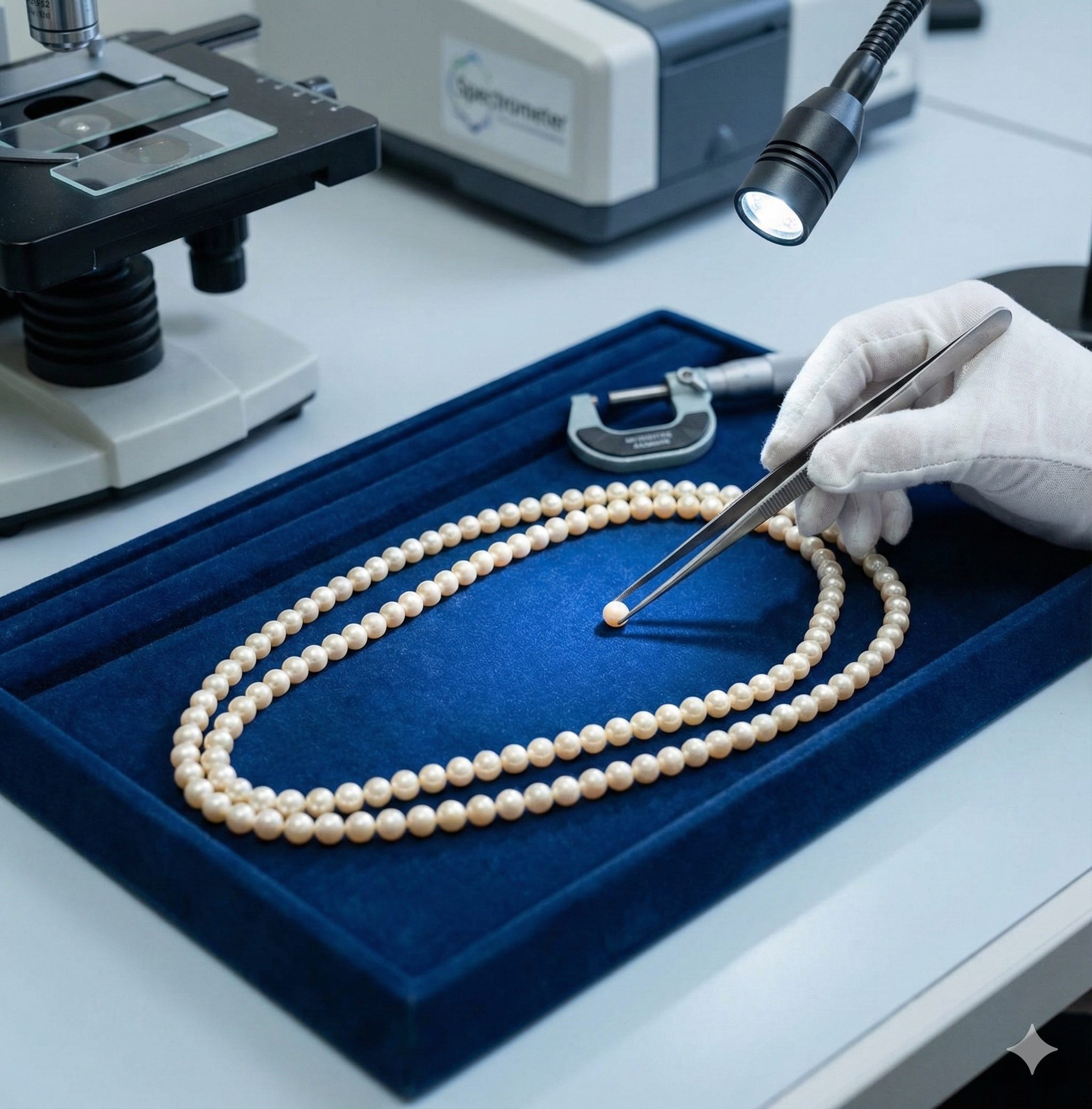
Imagine you're helping a client sort through their grandmother's jewelry box, a treasure trove of memories. You pull out a stunning strand of pearls, luminous and perfectly round, and the client beams, "These are family heirlooms, worth a fortune, aren't they?" It's a common sentiment, and as an appraiser, your role is to gently guide them through the nuances of pearl valuation, particularly the critical distinction between natural and cultured pearls. This isn't about diminishing sentiment; it's about understanding genuine market value.
The core difference lies in their origin. Natural pearls form spontaneously within mollusks without any human intervention. They are exceedingly rare today, often found in antique pieces. Cultured pearls, on the other hand, are the result of a deliberate process where a bead or tissue is inserted into the mollusk to stimulate pearl formation. While this process is natural in that it uses living organisms, the initial step is human-induced. This distinction, while subtle in appearance, can have a significant impact on value.
So, how can you begin to unlock the true value of your pearl jewelry? Firstly, consider the visual cues, though these are not definitive. Natural pearls often exhibit a more subtle, organic surface texture and a unique, sometimes uneven luster compared to the often-uniform perfection of cultured pearls. Look for slight irregularities in shape or surface – these can be indicators of natural origin. However, modern cultured pearls can be remarkably flawless, so don't rely solely on this.
Secondly, and more importantly, is understanding the history of pearl cultivation. The commercialization of cultured pearls began in the early 20th century. If your pearls predate this era, or are from specific regions known for natural pearl fishing (like the Persian Gulf historically), there's a greater chance they might be natural. This historical context is crucial. Think of it as a form of provenance; where and when did these pearls likely come into existence?
Thirdly, and this is where professional expertise truly shines, is examining the drill hole. In natural pearls, the drill hole often appears more irregular or "melted" due to the natural formation process and subsequent drilling. Cultured pearls, especially those from modern farms, will typically have a very clean, symmetrical drill hole, often revealing the bead nucleus if it's a bead-nucleated pearl. This is a more technical assessment, but a skilled appraiser can often spot these differences.
In practice, I recently appraised a magnificent necklace that the owner believed to be a priceless natural pearl treasure. Upon close examination, while the pearls were beautiful and uniformly sized, the drill holes were exceptionally clean, and the luster, though strong, had a very consistent, almost machine-like quality. Further research into the likely period of its creation confirmed it was a high-quality, early cultured pearl necklace, still valuable, but significantly less so than a comparable natural pearl strand.
Ultimately, the most reliable way to determine the true value of your pearl jewelry is to consult with an experienced and certified personal property appraiser. We have the training and the tools, including magnification and knowledge of pearl treatments, to accurately assess whether your pearls are natural or cultured, and to provide a professional valuation based on current market conditions. Don't leave your precious heirlooms to guesswork; let an expert illuminate their true worth.