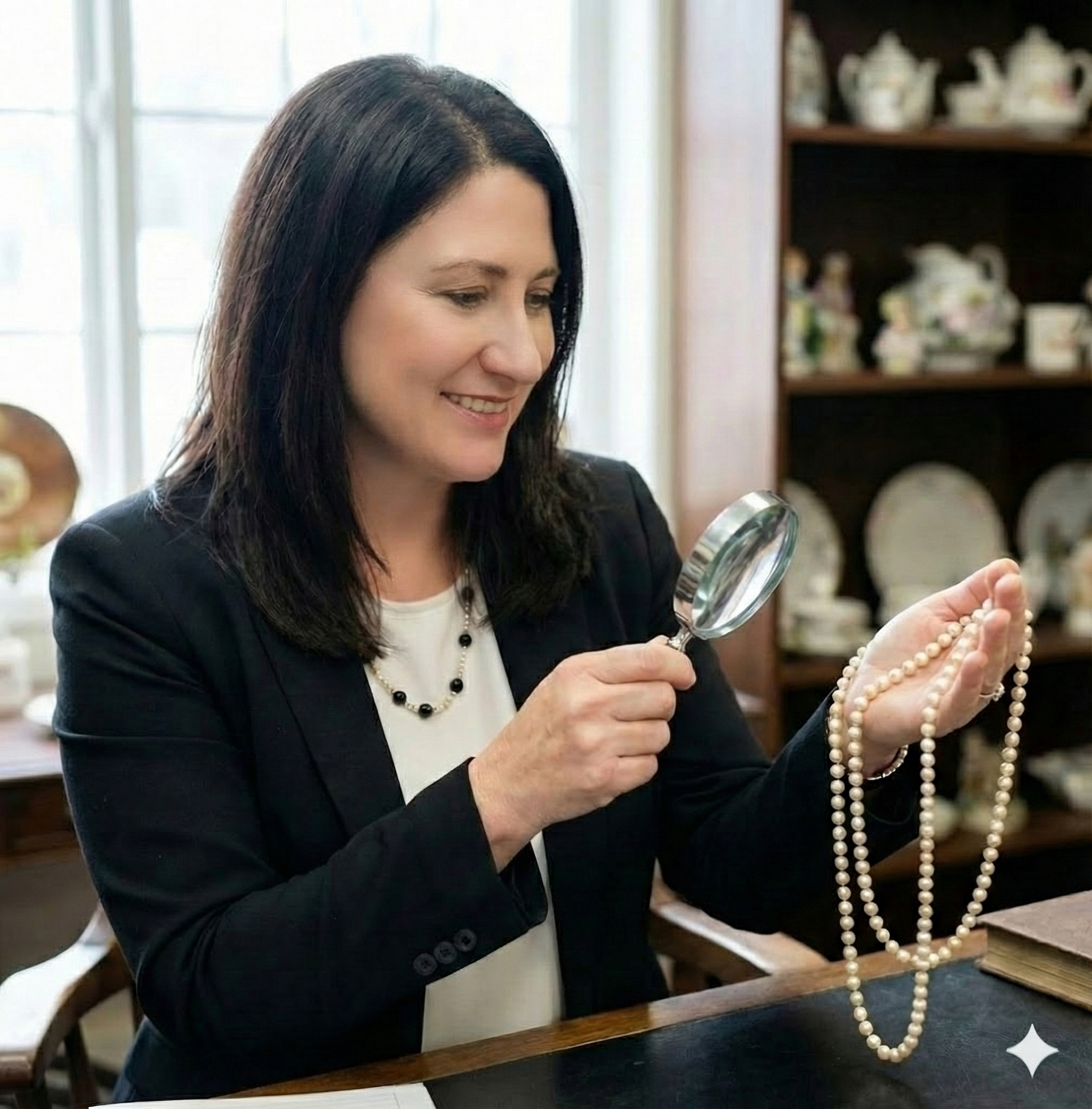
I remember a client, a lovely woman named Eleanor, who brought in a strand of pearls that had been her grandmother's. They were beautiful, certainly, but she was disappointed. "They just don't shine like I thought they would," she’d said, her voice tinged with a touch of melancholy. Eleanor had envisioned a radiant glow, a luminous quality that seemed to elude her heirloom. This is a common sentiment when people encounter pearls that, while perhaps old and valuable, don't immediately possess that breathtaking, almost otherworldly sheen. The magic of pearls isn't just in their shape or color; it's deeply rooted in their inherent luster and the pristine nature of their surface.
Understanding these two critical elements, luster and surface perfection, is key to appreciating the true beauty and value of any pearl. Luster, often described as the "glow" of a pearl, is essentially the light that reflects off the surface of its nacre. It's not a simple shine, but rather a deep, almost internal luminescence. Think of it like a perfectly polished mirror versus one that's slightly dulled; the difference is profound. For luster to truly impress, it needs to be bright, sharp, and concentrated, giving the pearl a rich, velvety appearance. A pearl with weak luster can look chalky or dull, even if its color is exquisite.
Surface perfection is the other half of the equation. Pearls are organic gems, meaning they grow within a living organism. This natural process, while miraculous, can sometimes lead to imperfections. These might include small bumps, blemishes, blisters, or even tiny chips. While a perfectly flawless pearl is exceptionally rare and commands a premium, a pearl with minimal, unobtrusive surface characteristics will always be more desirable and valuable than one marred by significant flaws. The goal is to find pearls where any surface characteristics are either absent or so small and strategically placed that they don't detract from the overall beauty and luster.
So, how can you begin to assess this yourself, even before seeking an appraisal? Firstly, observe the light. Hold the pearl under a good light source – natural daylight is best. Does the light reflect back sharply, creating a distinct, almost mirror-like sheen? Or is the reflection diffused and soft? This is your first clue to luster. Secondly, gently run your fingertip over the pearl's surface. Feel for smoothness. While you might feel the subtle concentric growth rings that are natural to some pearls, you shouldn't encounter significant bumps, pits, or rough patches. This tactile exploration, combined with visual observation, offers a practical introduction to surface perfection.
In practice, I often see clients who have a preconceived notion of what a pearl "should" look like, often based on mass-produced, treated pearls. When they bring in their grandmother's natural pearls, which might have a more subtle, yet far more profound luster and perhaps a few charming, character-defining surface marks, they can be initially underwhelmed. My role is to help them see the unique beauty and inherent value in these natural qualities, explaining the difference between superficial enhancement and intrinsic gemological characteristics. It’s about appreciating the story the pearl tells, not just its immediate sparkle.
When you’re ready to understand the true value and beauty of your pearls, whether they’re heirlooms or recent acquisitions, a professional appraisal is invaluable. Bring them in, and we can shine a light on their unique luster, assess their surface perfection, and unveil the secrets that make them truly special.